




















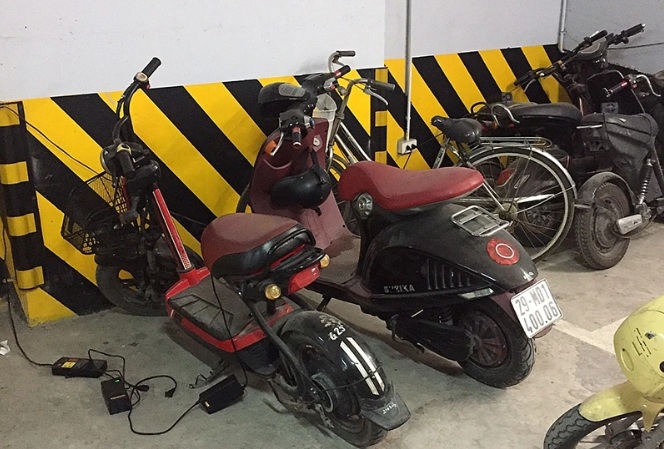
Recently, several apartment buildings in Hanoi have announced restrictions or temporary halts on parking electric motorbikes and electric bicycles in their basements.
The primary reasons cited are inadequate infrastructure and concerns over fire safety. However, the swift implementation and lack of resident consultation have sparked controversies in many areas.
At HH Linh Đàm, one of the capital’s most densely populated complexes, the building management initially announced a phased halt to electric vehicle parking. Following resident feedback, the Hoàng Liệt Ward authorities instructed the developer and operator not to refuse vehicle storage unless an official directive from a competent authority is issued. This is just one of many instances highlighting the confusion among apartment complexes in addressing the growing popularity of electric vehicles.
According to regulatory bodies, current laws do not prohibit parking or charging electric vehicles in residential buildings. The 2023 Housing Law, effective from January 1, 2025, also stipulates that parking areas must accommodate both gasoline and electric vehicles, without discriminating between vehicle types. Therefore, building managements are not permitted to impose blanket bans without a legal basis.
Instead of outright prohibitions, buildings are required to review their infrastructure, implement safety measures, designate appropriate charging areas, and enhance fire prevention and control systems. Restrictions on vehicle storage can only be applied if technical assessments by competent authorities conclude a safety risk.
Experts argue that sustainable solutions must begin with transparency and legal compliance. Building managements should clearly communicate the current state of infrastructure, upgrade needs, and adjustment timelines, while closely collaborating with regulatory bodies to assess safety levels according to technical standards. Investments in compliant charging areas, advanced fire detection systems, and increased supervision are considered essential steps.
In the long term, standardized management of electric vehicles in residential buildings will reduce conflicts, provide peace of mind for residents, and align with the city’s green transportation development goals. Extreme measures like complete bans should only be implemented when there is clear technical justification from competent authorities, to avoid disrupting residents’ lives and infringing on their legitimate rights.
TH (Tuoitrethudo)
Illustrative image