







In the first 10 months of 2025, electric vehicles accounted for approximately one-fourth of global new car sales, solidifying their growing dominance in the automotive market.
However, behind these positive growth figures lies a significant shift in the power dynamics of the automotive industry. Traditional manufacturers in Europe and the United States are facing mounting competitive pressure from China.

Statistics reveal that Chinese automakers hold a commanding lead, with 17 out of the top 20 best-selling electric vehicle models globally originating from China. Their advantages in production scale, cost efficiency, and integrated supply chains enable rapid market expansion, reshaping the global electric vehicle landscape.

Despite this, the top position remains unchanged. The Tesla Model Y continues to dominate as the go-to electric vehicle for the global middle class, boasting impressive sales of 841,293 units. This creates a substantial lead over its closest competitor, the BYD Song/Seal U, which has sold nearly 500,000 units.
This gap highlights two distinct development strategies. Tesla’s success is built on a highly focused approach, centered around a few globally significant models, with the Model 3 and Model Y as key pillars.

In contrast, Chinese brands, led by BYD, adopt a “product sea” strategy. BYD occupies nearly half of the Top 20 list by covering all price segments and meeting diverse customer needs. This clash exemplifies two distinct business philosophies: one thrives on brand strength and efficiency, while the other leverages a vast ecosystem and aggressive pricing.
Meanwhile, traditional manufacturers from Europe and the United States are increasingly marginalized, with the VW ID.4 being the only non-Chinese model in the leading group.

Overall, in the first 10 months of the year, pure electric vehicles and PHEVs accounted for about 25% of global new car sales. Pure electric vehicles dominate this structure, representing approximately 70%, while PHEVs make up around 30%. China remains the dominant market, accounting for over 60% of global electric vehicle demand, with a strong bias toward pure electric vehicles at about 80%, compared to 20% for PHEVs.
The United States shows a similar trend, while the European market exhibits a more balanced distribution between pure electric vehicles and plug-in hybrids. With this growth trajectory, the opportunity for new brands to enter the leading group appears to be narrowing, forcing established automakers to undergo significant transformations to avoid being relegated to niche markets.
TH (Tuoitrethudo)
VinFast Bags Prestigious Awards in India
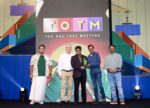
VinFast has been consecutively honored with three prestigious awards in India, including the ACKO Drive Awards 2026, Motorscribes Auto Awards 2025, and GaadiWaadi Editors’ Choice Awards 2026.
The Final F-Pace SVR Rolls Off the Line, Marking the End of Jaguar’s Gasoline Era
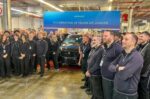
Jaguar, the iconic British luxury car brand, has reached a historic milestone as the final internal combustion engine (ICE) vehicle rolled off its production line, marking the end of an era.
Why Chinese Electric Vehicles Dominate ASEAN but Struggle in Vietnam
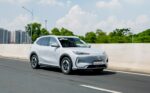
While neighboring countries like Thailand, Indonesia, and Malaysia have become prime markets for Chinese electric vehicle (EV) manufacturers, Vietnam stands out as a unique anomaly in the regional green mobility landscape.
VinFast Steals the Spotlight at Vietnam Mobility Show 2025 with Comprehensive Green Ecosystem

At the Vietnam Mobility Show (VnMS) 2025, VinFast showcases an impressive lineup of electric vehicles, ranging from cars and motorcycles to buses. With the largest display and test-drive area at the exhibition, VinFast offers attendees an unparalleled opportunity to experience the full spectrum of electrified mobility solutions.
Top-Selling Car Brands in Vietnam After 11 Months of 2025

As of November 2025, Vietnam’s automotive market has achieved a record-breaking sales milestone, with a staggering 522,644 vehicles sold.