



In the first 10 months of 2025, electric vehicles (EVs) accounted for nearly a quarter of global new car sales, solidifying their growing dominance in the automotive market.
However, behind these impressive growth figures lies a significant shift in the automotive industry’s power dynamics. Traditional manufacturers in Europe and the U.S. are facing mounting competitive pressure from China, which is rapidly reshaping the global EV landscape.

Statistics reveal that Chinese automakers hold a commanding lead, with 17 out of the world’s 20 best-selling EV models originating from China. Leveraging economies of scale, lower production costs, and a closed supply chain, China is swiftly expanding its market share and redefining the rules of the global EV game.

Despite this, the top spot remains unchanged. The Tesla Model Y continues to reign as the go-to EV for the global middle class, boasting an impressive 841,293 units sold. This places it well ahead of its closest competitor, the BYD Song/Seal U, which has sold nearly 500,000 units.
This gap highlights two distinct strategies. Tesla’s success is built on a highly focused approach, centered around a few globally dominant models, with the Model 3 and Model Y as its core offerings.

In contrast, Chinese brands, led by BYD, adopt a “product ocean” strategy. BYD alone occupies nearly half of the Top 20 list by catering to every price segment and customer need. This clash of strategies underscores two distinct business philosophies: one thrives on brand strength and efficiency, while the other dominates through a vast ecosystem and aggressive pricing.
Meanwhile, traditional European and American manufacturers are increasingly marginalized, with the VW ID.4 being the only non-Chinese model to secure a spot among the leaders.

Overall, in the first 10 months of the year, pure electric vehicles and plug-in hybrids (PHEVs) accounted for approximately 25% of global new car sales. Pure EVs dominate this segment, representing about 70% of the total, while PHEVs make up the remaining 30%. China remains the dominant market, accounting for over 60% of global EV demand, with pure EVs comprising around 80% of its sales, compared to 20% for PHEVs.
The U.S. shows a similar trend, while Europe maintains a more balanced distribution between pure EVs and plug-in hybrids. With this momentum, the window for new entrants to break into the top tier appears to be narrowing, forcing legacy automakers to undergo radical transformations to avoid being relegated to niche markets.
Vingroup and Congo’s Capital City Join Forces to Revolutionize Green Transportation

Vingroup Group has signed a tripartite Memorandum of Understanding (MoU) with the City of Kinshasa (Democratic Republic of the Congo) and Exposure SARL, establishing a comprehensive framework for collaboration. This partnership aims to develop a sustainable, modern, and accessible urban transportation system in the City of Kinshasa.
Top 10 Best Car Brands of 2026: Underrated Vietnamese Favorite Takes the Lead
The latest data from *Consumer Reports* reveals significant shifts in the 2026 rankings of the top 10 automotive brands, with substantial gaps between manufacturers. This highlights both standout winners and struggling contenders in the industry.
VinFast Unveils Green Mobility Ecosystem at Vietnam Mobility Show 2025
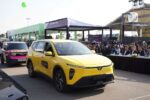
VinFast proudly unveils its immersive showroom, offering a comprehensive green mobility ecosystem experience. Discover our full lineup of electric cars, e-scooters, and electric buses, alongside cutting-edge charging and battery-swapping solutions, all complemented by attractive sales policies.
Top-Selling Car Models in Vietnam After 11 Months

With just one month left until the end of 2025, the sales race across various automotive segments has all but reached its thrilling conclusion.
VinFast Steals the Spotlight at Vietnam Mobility Show 2025
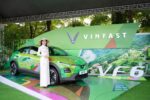
At the Vietnam Mobility Show (VnMS) 2025, VinFast showcases an impressive lineup of electric vehicles, ranging from cars and motorcycles to buses. With the largest display and test-drive area at the exhibition, VinFast offers attendees an unparalleled opportunity to experience the full spectrum of electrified mobility solutions.