






















Car headrests are a familiar feature, yet often overlooked. Contrary to popular belief, they’re not just for comfort or to cushion your head during rush-hour traffic jams. In reality, they play a critical role in your vehicle’s safety system.
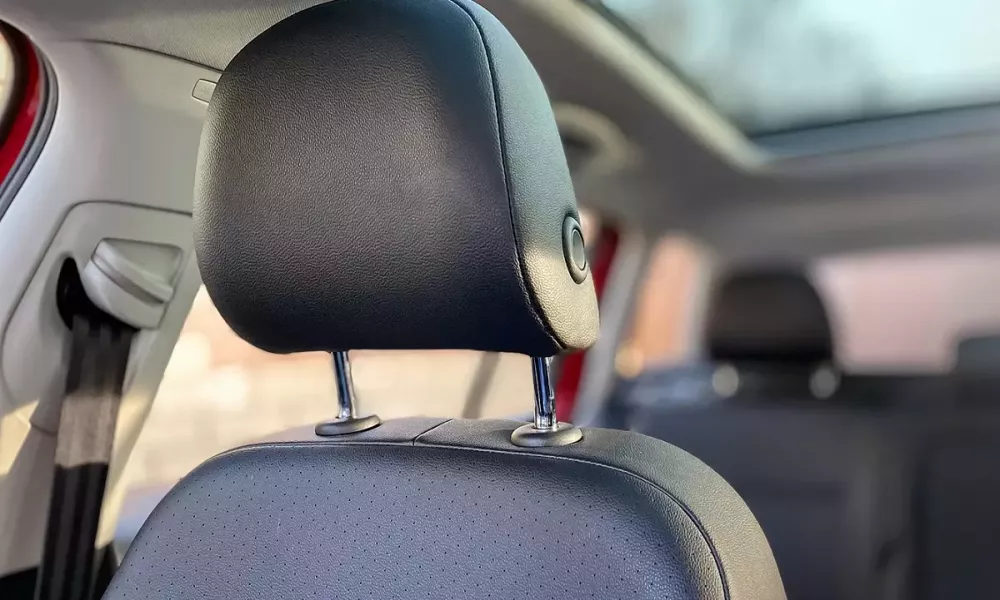
Car headrest.
While commonly referred to as “headrests,” their proper name is “head restraints.” Their primary function is to prevent whiplash injuries during traffic collisions. To shed more light on this topic, Jalopnik’s reporter spoke with Justin Sammons, a seating design engineer at Nissan. According to Sammons, there are three essential things every driver should know about their car’s headrest.
Headrests Are a Vital Part of Your Vehicle’s Safety Structure
Having a foam cushion inches from the back of your skull isn’t always comfortable, especially for those with thick hair, ponytails, or freshly styled locks. However, Sammons emphasizes that viewing headrests as anything other than a safety device is a mistake.
Headrests are designed to protect occupants from whiplash during rear-end collisions. When another vehicle strikes yours from behind, your body tends to remain stationary while your car accelerates forward with significant force, depending on the impact severity.
While the seat supports your body, your heavy head snaps backward and then forward at high speed. Here, the headrest acts like a baseball mitt, catching your head and minimizing stress on the cervical spine.
Video demonstrating how the Insurance Institute for Highway Safety (IIHS) simulates rear-end crashes to evaluate seat and headrest effectiveness in preventing neck injuries.
Never Remove or Reverse Your Headrest
Automakers invest significant time and resources in designing seats that balance comfort and safety. Since 1991, when federal regulations mandated headrests for front seats in all cars, trucks, and SUVs in the U.S., their effectiveness in reducing whiplash injuries has improved dramatically.
Some drivers remove or reverse their headrests for added comfort, but Sammons warns against this practice. “Even slight misalignment can reduce seat effectiveness, let alone removing or reversing the headrest,” he explains.
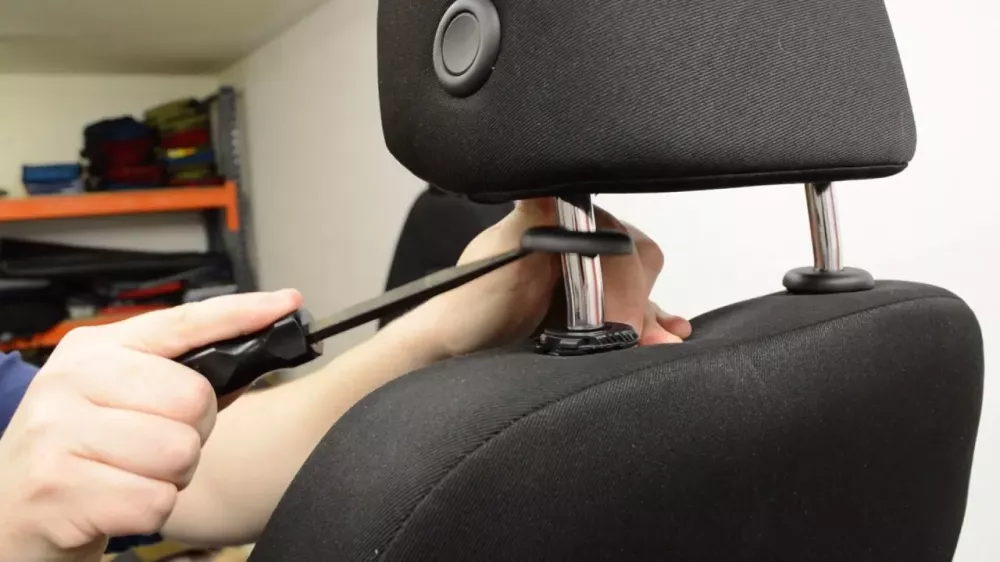
Avoid removing or reversing your headrest.
Some headrests tilt forward, which may feel uncomfortable but prioritizes safety. This design allows the seat or headrest to flex slightly as the occupant is thrust backward during a collision.
Adjust Your Headrest Height Properly
Proper headrest height is crucial. Sammons recommends adjusting it so the internal metal frame aligns with the top of your ears.
While comfort is important, it’s not the sole criterion. Headrests aren’t just foam and fabric—like the seat, they contain a metal frame for rigidity. Locate this frame by gently pressing the headrest. Ensure the metal frame sits at least level with the top of your ears.
For shorter individuals, this may not be an issue. However, taller people or those with longer torsos should prioritize this adjustment for maximum safety.

Adjust your headrest so the metal frame aligns with the top of your ears.
Sammons stresses that headrests are integral to your vehicle’s safety system, designed to protect you in accidents. Rear-end collisions are among the most common in the U.S., and while you can’t always avoid them, proper headrest adjustment offers crucial protection. Keep it correctly positioned and secure.
Essential Safety Gear for Kids in Cars: What Every Parent Should Know

As of January 1, 2026, new regulations on child safety in vehicles will come into effect, marking a significant shift in the Road Traffic Order and Safety Law of 2024.
Electric Car Fire Claims Lives of Two Children After Door Handles Fail to Open

A man attempted to rescue the victims but was unable to open the doors of the crashed Tesla electric vehicle.
Ford Recalls Vehicles Over 100 Times in the U.S. in Less Than 9 Months

Ford has issued nearly five times as many recalls in the U.S. this year compared to Chrysler.
The Blind Spot Ahead of Cars is Growing

A study has revealed that the 10-meter visibility range in front of various car models in the US tends to decrease over time.
The Ultimate Guide to Hyundai’s Massive Recall: Are You Affected by the Faulty Backup Camera Issue?

The Hyundai Motor Company is issuing a voluntary recall for select Hyundai Santa Fe and Elantra N models. The recall affects certain vehicles equipped with a rearview camera that may need to be replaced.