























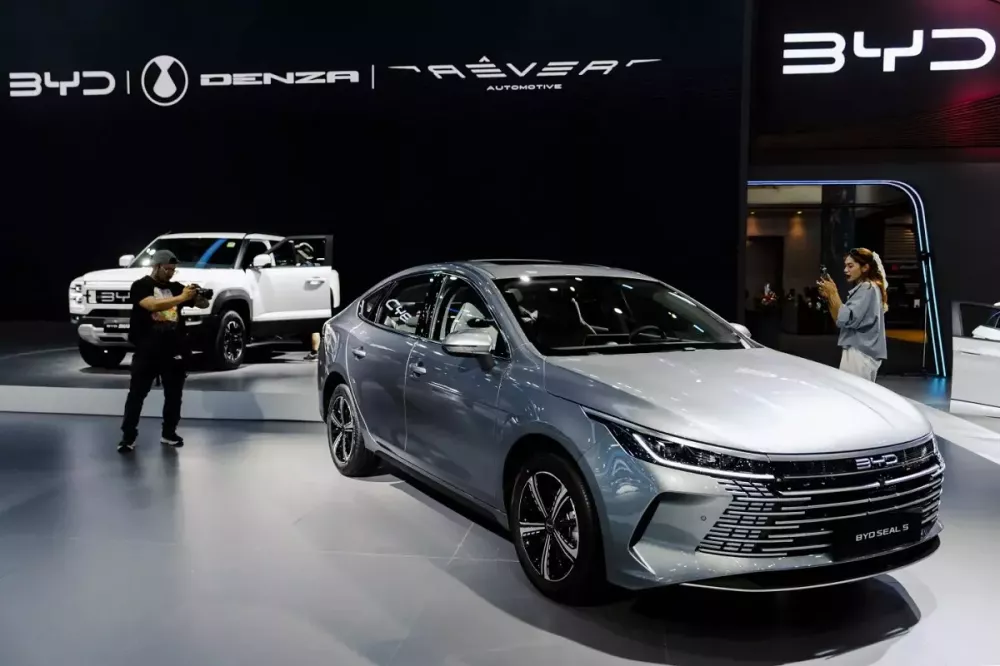
BYD has achieved its full-year sales target and is poised to surpass Tesla as the world’s largest electric vehicle (EV) manufacturer by 2025. However, these milestones are somewhat overshadowed by the challenging outlook for China’s automotive market in 2026.
Specifically, BYD delivered a total of 4.6 million vehicles to global customers last year, marking a 7.7% increase compared to 2024. This figure aligns with the company’s revised sales target announced in September 2025. The Shenzhen-based automaker sold nearly equal numbers of battery electric vehicles (BEVs) and plug-in hybrid electric vehicles (PHEVs), with approximately 2.26 million units of each.
According to data compiled by Bloomberg, Tesla delivered around 440,900 vehicles globally in Q4 2025, an 11% decline year-over-year. This equates to approximately 1.66 million vehicles sold for the full year, marking the second consecutive year of sales decline for the company.
BYD and its competitors will face mounting pressure in 2026 as China phases out certain EV subsidies. The influx of new models is also intensifying competition within the Chinese market. Meanwhile, trade barriers pose challenges to BYD’s international expansion ambitions.
BYD’s Growth Slows Amid Fierce Competition
China’s top-selling automaker has faced intensified competition from rivals like Geely and Xiaomi, whose innovative new models are increasingly attracting consumers.
During an investor meeting in early December 2025, BYD CEO Wang Chuanfu acknowledged that the company’s technological edge, maintained over the past few years, has diminished, impacting domestic sales. He also hinted at upcoming technological breakthroughs and expressed confidence in BYD’s ability to regain its advantage, citing its 120,000-strong engineering team, as reported by Chinese media.
Morgan Stanley forecasts a more robust recovery in China’s domestic market following BYD’s launch of significant upgrades to its vehicle lineup in early 2026.
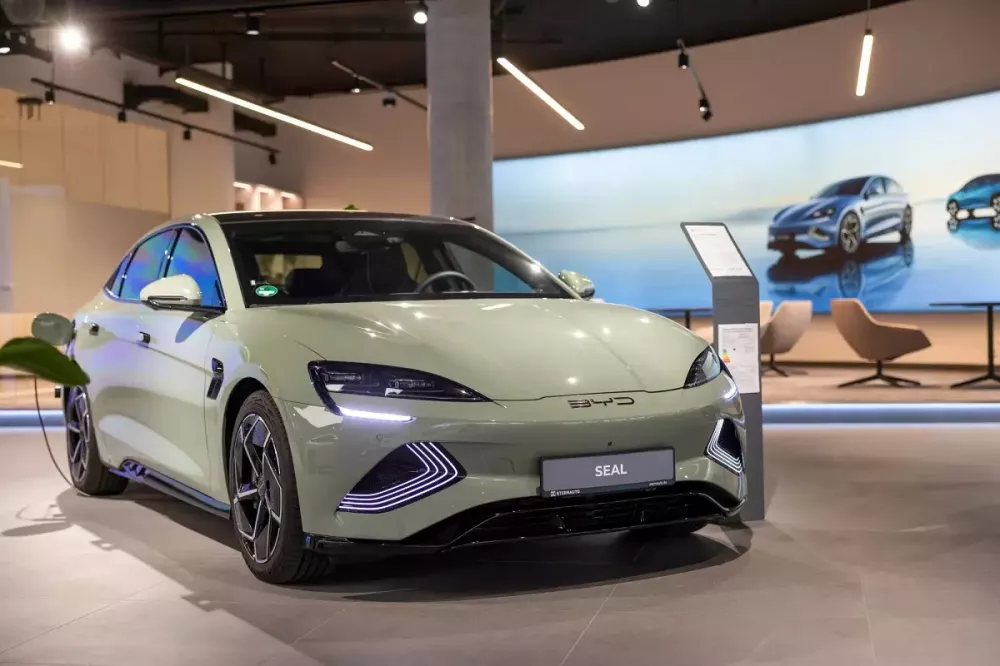
2026 will be a challenging year for the leading EV maker as Chinese authorities tighten automotive industry regulations.
A bright spot for BYD is its strong overseas sales growth. Deliveries outside China reached 1.05 million units in 2025, surpassing the upper forecast of 1 million, offsetting domestic market declines. The company’s passenger EV and hybrid sales in China have fallen for eight consecutive months, plunging 37.7% in December 2025.
According to a November 2025 Citigroup report, BYD aims to expand its overseas sales to between 1.5 million and 1.6 million units in 2026, as revealed during a meeting with company executives.
Pressure is mounting on BYD after the company reported consecutive quarterly profit declines due to intense price competition in China. Meanwhile, the Chinese government is working to curb excessive price cuts in the automotive sector. This increased scrutiny is expected to accelerate industry consolidation and disrupt established market dynamics.
BYD Outpaces Tesla in EV Sales
Analysts remain confident that BYD is better positioned to navigate these challenges compared to many competitors. Bloomberg estimates suggest BYD’s total sales could rise to 5.3 million units next year. Deutsche Bank analysts anticipate that new product launches and technological advancements will enhance the company’s competitive edge.
This could enable BYD to widen its lead over Tesla, which is grappling with its own set of challenges. Tesla experienced a sharp sales decline in early 2025 as it retooled production lines across all assembly plants for the upgraded Model Y. CEO Elon Musk’s controversial role in the Trump administration has also alienated some consumers. Additionally, the termination of federal EV subsidies in the U.S. is expected to further pressure demand.
Southeast Asia Emerges as the New Powerhouse in the Global Electric Vehicle Revolution

The global automotive market is witnessing a remarkable shift as emerging nations, particularly in Southeast Asia, are no longer mere followers but have emerged as leaders in the transportation electrification movement.
BYD’s October 2025 Sales Surge to Triple Tesla’s Premium Segment Performance
The European automotive market is undergoing a seismic shift as BYD reports remarkable growth in October 2025, starkly contrasting Tesla’s significant decline during the same period.
BYD Reaches Milestone: 70,000th Vehicle Rolls Off the Assembly Line in Thailand

BYD’s manufacturing plant in Rayong, Thailand, has reached a significant milestone by rolling out its 70,000th vehicle, just over a year since its operations began.
Skoda Selects Vietnam as New Electric Vehicle Production Hub
The Czech automotive brand is strategically positioning Vietnam as its new regional manufacturing hub, with a particular focus on electric vehicles—a sector poised for explosive growth in the coming decade.
“90-Degree Rotating Screen: A Gimmick Feature Set to Disappear from BYD Vehicles”

BYD’s decision to discontinue the rotating screen in its vehicles marks a pivotal shift toward a more streamlined and seamless interior technology experience.