





























Starting January 1, 2026, evading traffic fines will become significantly harder as Decree 296/2025 takes effect.
Under the Law on Handling Administrative Violations, deducting a portion of salary or income is not a new penalty but a measure to enforce compliance with penalty decisions. This measure is only applied when individuals fail to voluntarily comply with the decision within the legal timeframe.
Specifically, violators have 10 days from receiving the penalty decision to pay the fine (unless the decision specifies a longer period). Filing a complaint or lawsuit does not suspend the obligation to pay the fine, except in special cases as prescribed by law.
Only after this period, if the individual still fails to comply, may the competent authority apply coercive measures, including deducting a portion of salary, income, or pension.
A notable new feature of Decree 296/2025, effective from January 1, 2026, is the detailed and stringent procedure for salary and income deduction.
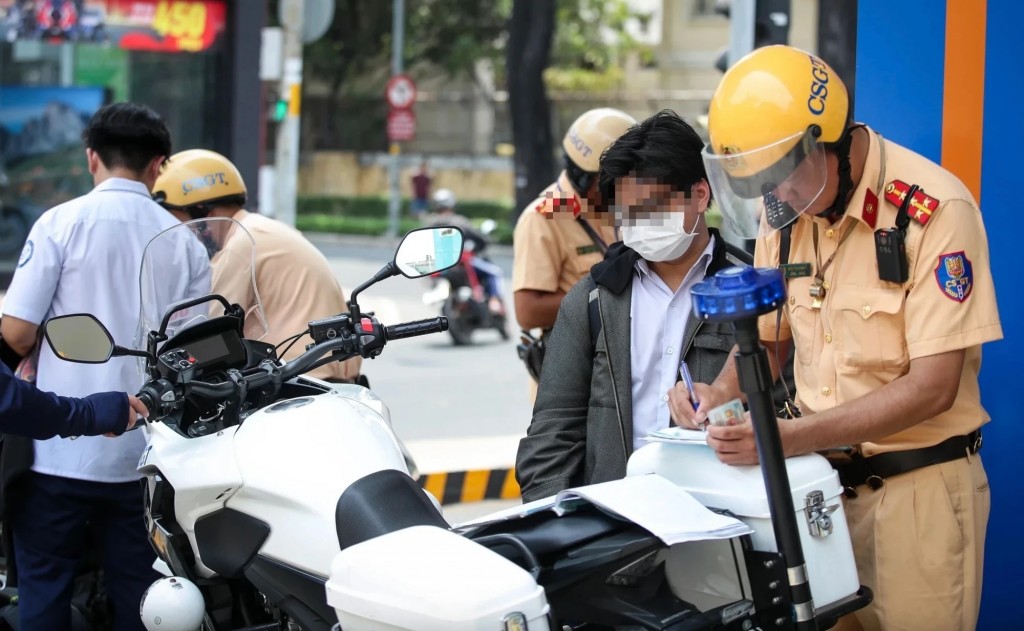
Accordingly, after the deadline for executing the penalty decision has passed without voluntary compliance, the authorized person will take the following steps:
First, request information. The individual subject to coercion, the employer, or the income management agency must provide information about salary, income, or pension within 3 to 5 working days, depending on the case. The provided information must be accurate and legally accountable.
Second, verify income. The authority issuing the coercion decision is responsible for verifying relevant information to ensure the deduction is applied to the correct individual under the right conditions.
Third, issue the coercion decision. Within 2 working days of confirming all information, the authorized person must issue a decision to deduct a portion of salary or income.
This decision must clearly state the legal basis, details of the individual subject to coercion, the salary or income payer, the amount to be deducted, the implementation timeframe, and the State Treasury account receiving the fine.
Salary deduction is not applied immediately upon a traffic violation but is the final step in a series of measures to ensure compliance with penalty decisions. In reality, this measure has existed in the law for many years, but only now has a detailed, unified procedure for its implementation been established.
Decree 296/2025 also clearly assigns responsibilities to both the violator and the employer, while requiring authorities to strictly adhere to timelines and verification procedures, avoiding abuse or unnecessary impact on workers’ lives.
TH (Tuoitrethudo)
How to Check for Cold Penalties?

“Checking for traffic violations is now easier than ever, thanks to the advanced technology of traffic cameras. If you’re a car owner wondering whether your vehicle has been caught on camera for any traffic offenses, there’s a simple way to find out. You no longer have to worry about missing a traffic ticket or wondering where to pay the fine. Simply put, there is a convenient and efficient way to resolve this matter. All it takes is a quick online search to find the relevant authority or website that handles traffic violations captured by these cameras. With just a few clicks, you can gain peace of mind or take the necessary steps to address any violations. It’s a straightforward process that empowers you to stay on top of your vehicle’s record and maintain your driving integrity.”
The Great American Plate Blunder: Why Intentional Obstruction of License Plates is Taken Less Seriously in the US Compared to Vietnam

From next month, New York City will implement a $50 fine for drivers who deliberately obscure their license plates or fail to keep their vehicles clean enough to ensure plate visibility.
What Are the Fine Systems for Running a Red Light in Different Countries?

In many countries, running a red light is a serious offense. Those who commit such an infraction face monetary fines and points deducted from their driving license.
The Late Payment Penalty: A Costly Affair.

Recent social media posts have circulated information regarding penalties for late payment of administrative fines for traffic violations, suggesting that interest may be incurred.
“The High Price of Traffic Violations: A Global Perspective on Penalties and Punishments”

As per Decree 168, which comes into effect from January 1, 2025, traffic violations will incur fines up to 30 times higher than previously implemented.