







At the launch event of the UC3 electric motorcycle in Vietnam, Honda showcased several unique concept models. Among them was the Honda EV Outlier, a concept bike that debuted at the Japan Mobility Show 2025.
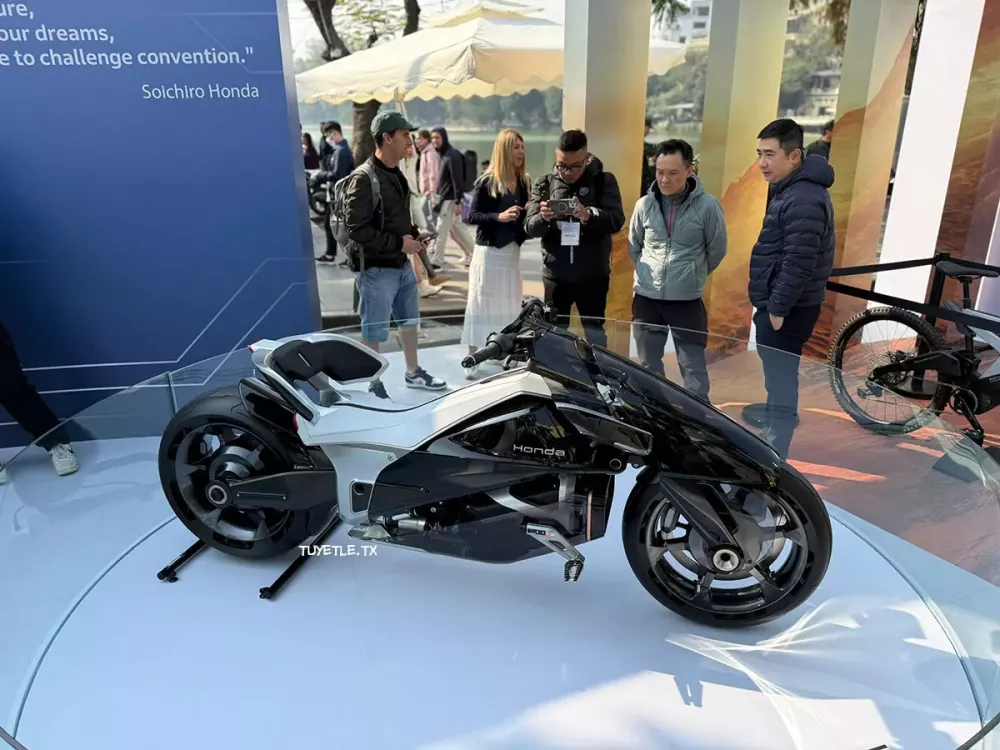
According to Honda, the EV Outlier offers a realistic glimpse into what motorcycles might look like on the streets by the 2030s. This doesn’t mean the model will enter mass production—chances of that are virtually zero. However, many of its features could inspire future commercial Honda models.
The Honda EV Outlier boasts several intriguing elements. Most noticeable is its forward-leaning riding posture with high handlebars. Is it a cruiser? Possibly. Yet, it also evokes the aesthetics of sci-fi vehicles.
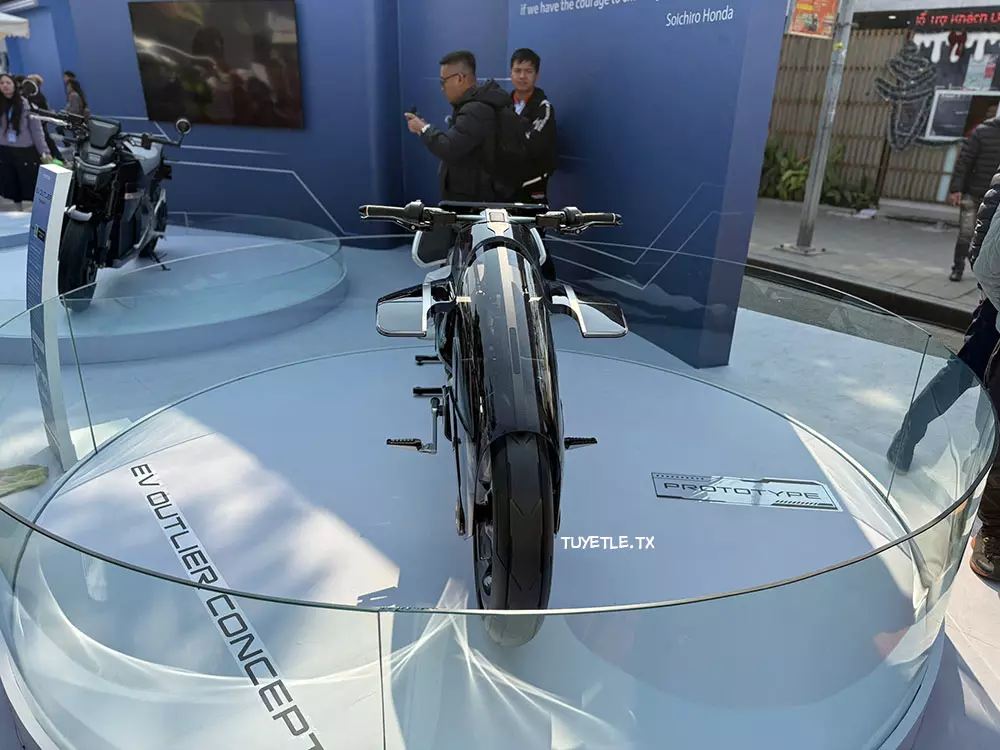
The Honda EV Outlier features a distinctive riding stance.
Designed as a single-seater, it includes an aluminum-backed seat resembling a lounge chair, with sides that discourage aggressive cornering. Clearly not a sports bike, its massive rear tire hints at substantial torque. The rear wheel doesn’t bear all the load, as the EV Outlier is dual-motor driven.
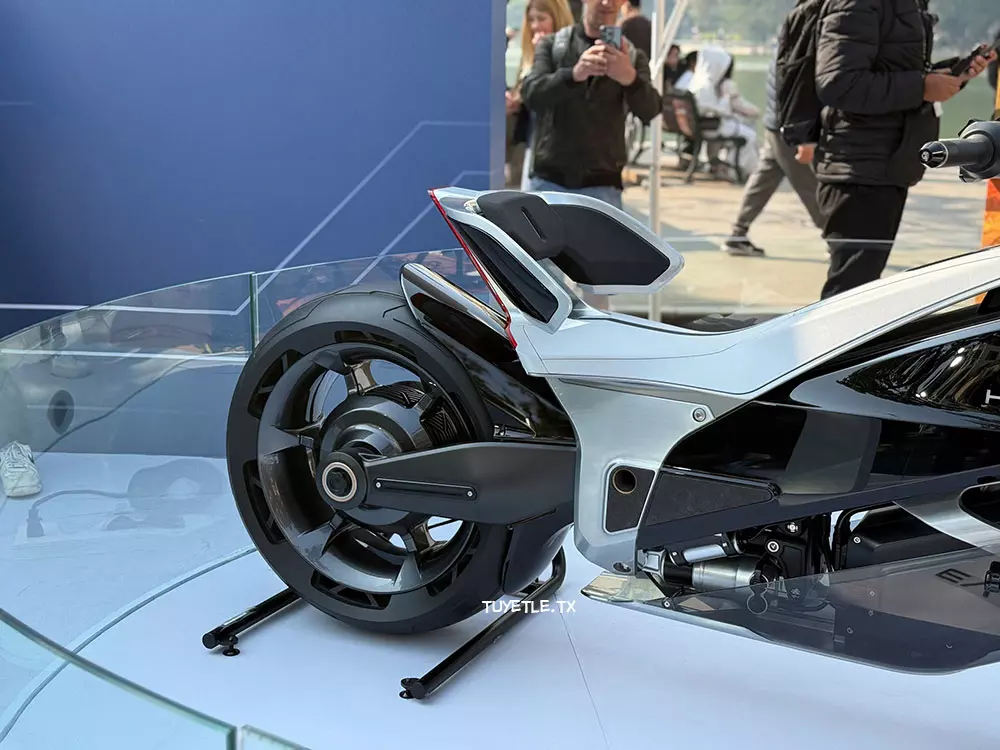
The Honda EV Outlier is a single-seat vehicle.
Each wheel houses a motor within its hub. The rear motor operates most of the time, while the front motor engages only during maximum acceleration.
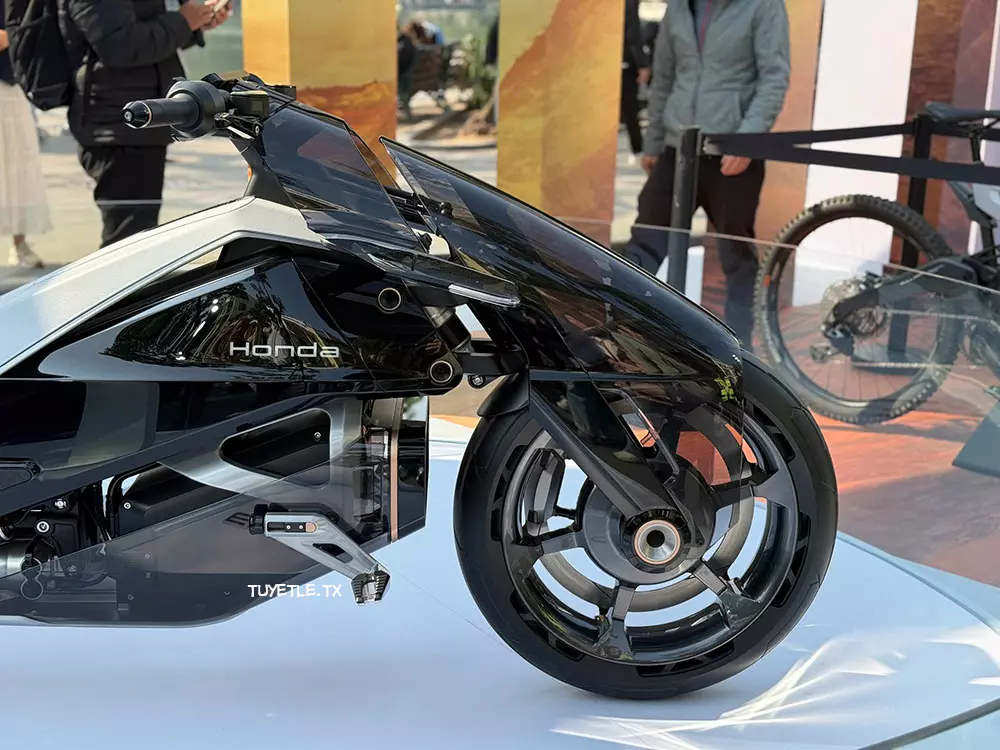
The Honda EV Outlier is dual-motor driven.
A TFT screen lies flat on the body behind the handlebars, where a fuel tank would typically be on conventional motorcycles. This screen displays power distribution to each motor. However, the primary display is a slim, wide strip mounted on the handlebars, spanning nearly the full width between the grips. The center shows speed, while the sides act as digital rearview mirrors, displaying the view behind the bike.
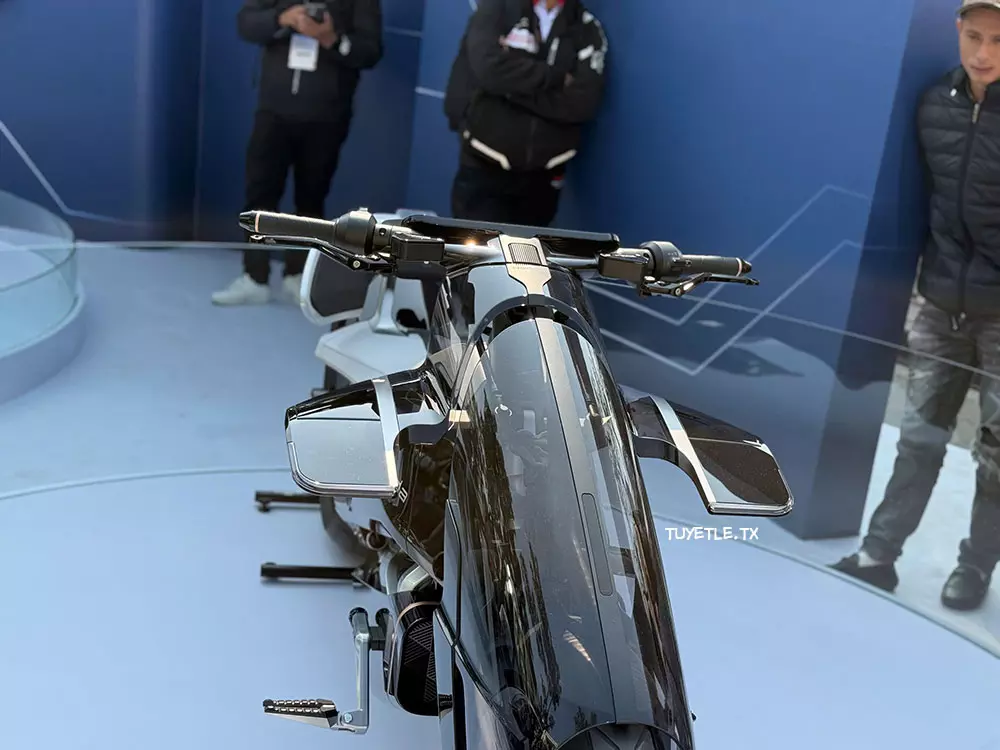
The Honda EV Outlier features an extended screen between the handlebars.
Additionally, the EV Outlier employs a Hossack suspension system with dual A-arms, similar to the current Gold Wing. The battery is positioned low in the frame, lowering the center of gravity. Given the “2030s” timeline, it’s likely to use solid-state batteries, which Honda has pledged to introduce in electric motorcycles by the early 2030s.
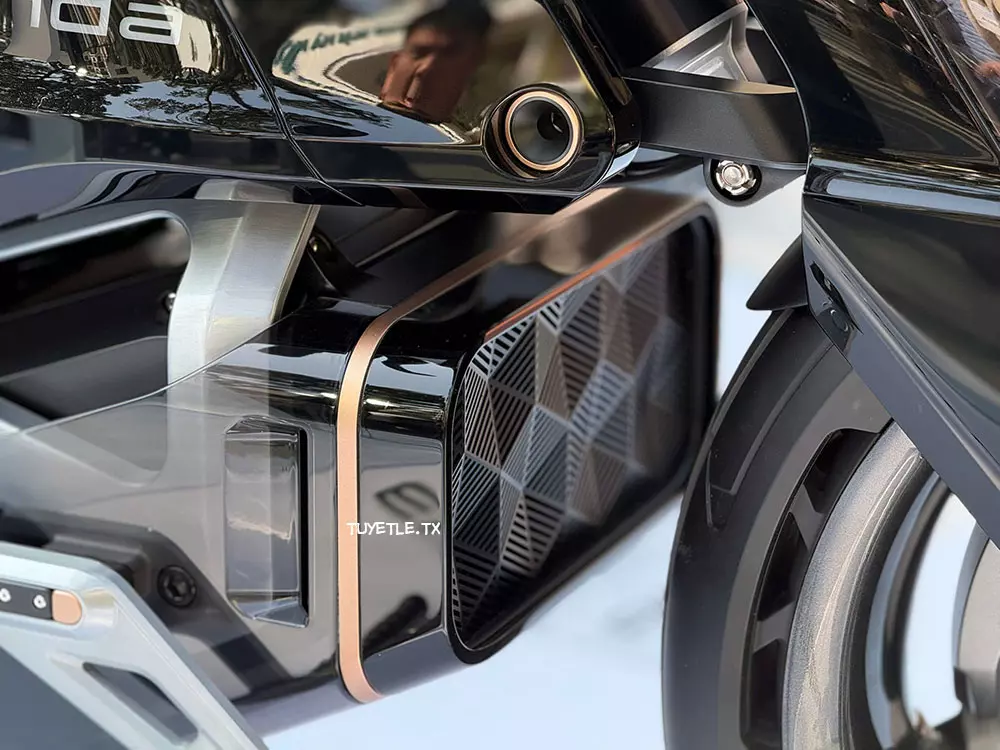
The Honda EV Outlier likely uses solid-state batteries.
The transparent bodywork is another standout feature, revealing mechanical components like the front suspension. The front fairing attaches to the forks, moving with the suspension travel, nearly eliminating the gap between the front tire and body. The transparent underbody panel encases the battery. This design achieves excellent aerodynamics while maintaining the naked bike aesthetic. As aerodynamics become crucial for extending electric vehicle range, transparent panels offer both efficiency and a showcase of technical appeal.
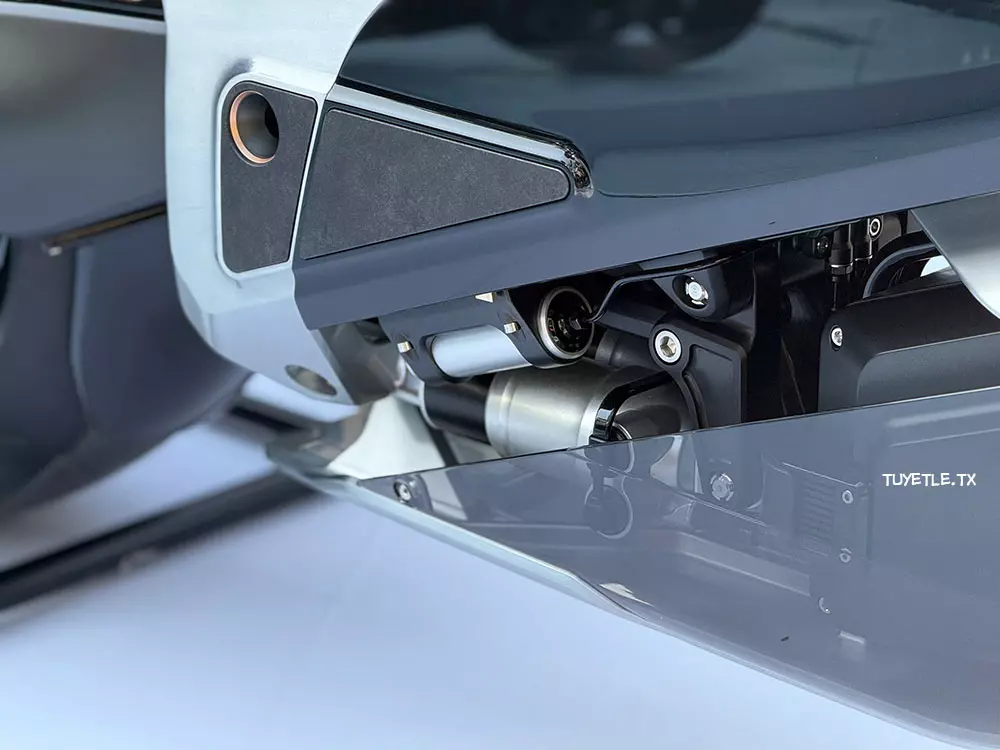
The Honda EV Outlier features transparent bodywork.
In summary, the Honda EV Outlier demonstrates that electric motorcycles don’t have to conform to a single design. The future promises diversity, perhaps even more than today. Whether you appreciate this vision or not, Honda’s message is clear: the next decade will likely bring greater variety than ever before.
Honda UC3 Launches: Priced Over 100 Million VND, Expected to Be Assembled in Vietnam by 2026

Recently, Honda officially unveiled its brand-new all-electric motorcycle, the UC3, in the Southeast Asian market. The Honda UC3 is priced at approximately $4,200 (over 110 million VND).
Honda EV Outlier Concept: Futuristic Electric Motorcycle Makes Its Debut in Vietnam
At the recent launch event for the new UC3 lineup, Honda stunned attendees by unveiling the groundbreaking EV Outlier Concept, a visionary electric vehicle that redefines innovation and design.
Revolutionary Verge TS Pro Unveiled: World’s First Solid-State Battery Electric Motorcycle with 600km Range per Charge Launches
Verge Motorcycles has set a new benchmark in the global two-wheeled industry with the unveiling of its groundbreaking electric motorcycle, the TS Pro.
Gogoro Partners with Castrol to Enter Vietnam: Taiwan’s Electric Vehicle Giant Unveils New Market Strategy
Amidst a sharp decline in domestic sales, Gogoro is poised to enter Vietnam’s electric motorcycle market through a strategic partnership with Castrol.
Honda EM1 e: Launching in Vietnam on October 10th – Anticipated Price Around 40 Million VND
On January 10th, Honda Vietnam is set to unveil an entirely new electric motorcycle model, marking a significant addition to their lineup.