





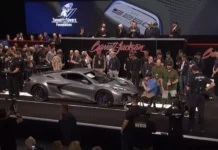
China remains the world’s largest automotive market, characterized by fierce competition. Over the past few years, numerous car manufacturers have faced challenges in this market due to their inability to keep pace with evolving trends. Notably, during the latter part of 2025 and early 2026, several car brands were forced to close multiple dealerships due to poor performance.
Audi
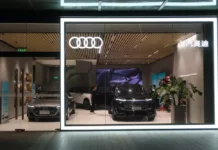
In January 2026, numerous Audi owners reported the sudden closure of the Kaifeng Jin’ao Audi dealership. Customers who had purchased multi-year maintenance packages, priced between 16,800 and 18,800 Chinese yuan (approximately $2,300–$2,600), were left unable to utilize their services. Alarmingly, some customers had purchased vehicles less than six months before the dealership ceased operations. Employees of the dealership are also pursuing legal action due to unpaid wages.
FAW-Audi’s customer service department stated that the dealership had withdrawn from the company’s network on November 13, 2025. The company advised affected customers to contact the dealership directly or consider legal action under applicable laws.
In 2025, Audi’s sales in China declined by 5% year-on-year, totaling 617,500 units. This marked the second consecutive year of sales decline in the market neighboring Vietnam.
Previously, FAW-Audi announced that its gasoline vehicle sales and market share had regained the top position in China’s luxury car segment (including imports) after six years. However, actual sales figures revealed a decline. Compared to 611,100 units in 2024, FAW-Audi sold only 570,100 units in 2025, a 6.7% decrease.
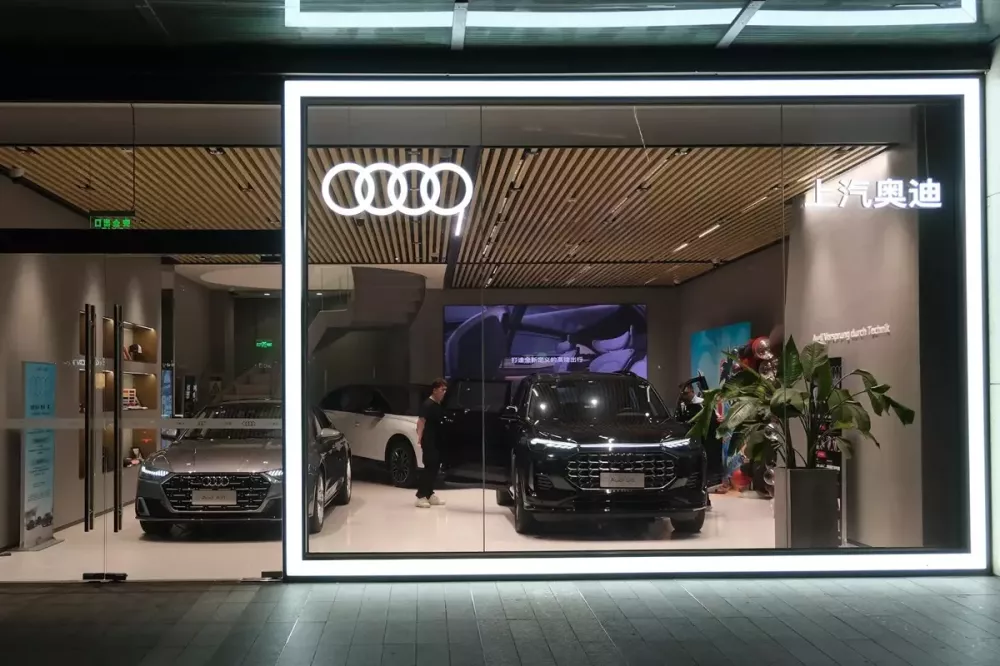
Facing market pressures, Audi has launched significant price reductions and promotions for several models. Some dealerships are offering the 2026 Audi A3 at a starting price of 106,700 Chinese yuan (approximately $14,700), a 40% discount. The Audi Q3 and Q4 e-tron are priced from 131,800 Chinese yuan ($18,100) and 157,900 Chinese yuan ($21,800), respectively, both with approximately 50% discounts.
For the remainder of 2026, FAW-Audi plans to launch the new-generation A6L and the A6L e-tron, its first all-electric sedan developed on the Premium Platform Electric (PPE) specifically for the Chinese market.
Porsche
Similar to Audi, Porsche is facing significant challenges in the world’s largest automotive market. The company announced plans to close approximately 30% of its dealerships in China to reduce costs and allocate resources to research and development (R&D), according to CEO Pan Liqi. Mr. Pan also confirmed that Porsche has no plans to establish a production facility in China.
In late 2025, Porsche faced a notable incident when several dealerships in China reportedly ceased operations due to sluggish sales and financial pressures. By January 2026, the situation escalated with the closure of the Porsche Zhongyuan Zhengzhou Center, followed by the Porsche Mengguan Guiyang Center. As a result, Porsche China had to address outstanding issues such as unresolved deposits and missing vehicle certification documents.
The root cause stems from Porsche’s prolonged sales decline in China. In 2025, the company delivered only 41,938 vehicles to Chinese customers, a 26% year-on-year decrease. Porsche’s sales in China have been on a downward trajectory since 2022, when it sold 95,671 units. Within three years, sales plummeted by 56.2%. In response, Porsche has intensified cost-cutting measures to mitigate the decline.
In an interview with Yicai on January 26, Mr. Pan stated that Porsche China’s primary focus is implementing cost-control measures. Specifically, the company plans to reduce its dealership network to approximately 80 locations, a 30% reduction, by 2026. Previously, Porsche China had 150 dealerships at the end of 2024 and 114 at the end of 2025.
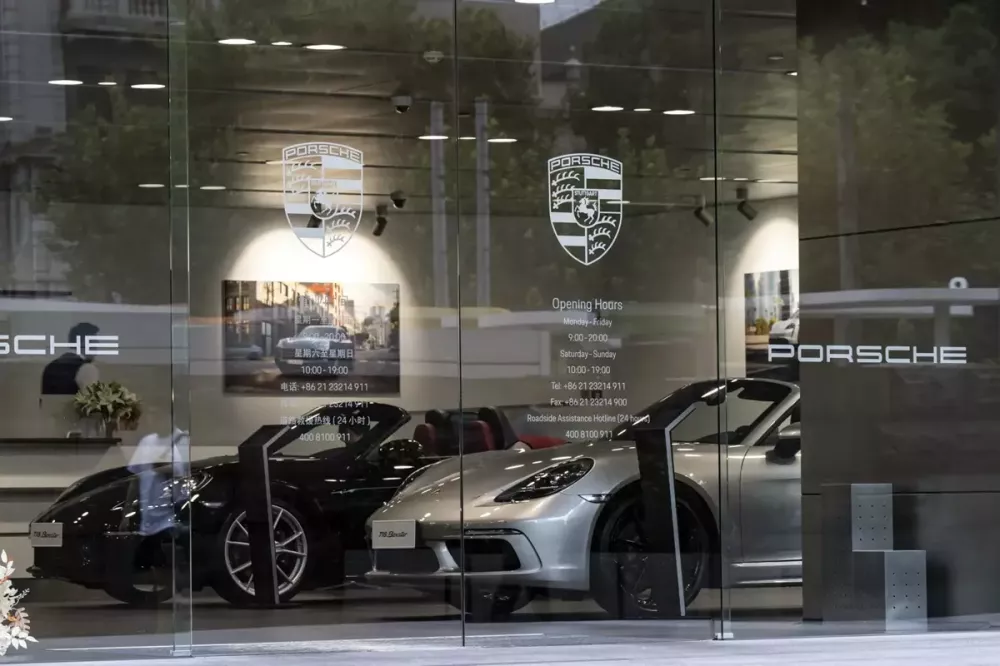
Porsche plans to reduce its dealership network in China by 30% in 2026.
Savings from streamlining the distribution network will be allocated to Porsche’s first integrated R&D center outside Germany, located in Shanghai, which opened in November last year. Mr. Pan noted that Porsche China is undergoing a strategic realignment, focusing on long-term sales growth through a streamlined dealership system and the introduction of market-specific models.
According to Porsche China’s CEO, the company will launch two new models in 2026: an internal combustion engine (ICE) SUV and a plug-in hybrid (PHEV) in the B and D segments. However, Mr. Pan denied plans for localized production in China, stating that Porsche is evaluating Chinese suppliers for smart driving solutions.
In the short term, Porsche’s 2026 strategy prioritizes quality over quantity, with success not solely measured by sales figures. This approach suggests that Porsche anticipates further sales declines in 2026 as it works to introduce products better suited to the Chinese market.
Li Auto
According to Chinese sources, domestic automaker Li Auto is implementing a comprehensive retail network optimization plan, which includes closing approximately 100 underperforming stores in the first half of 2026. The closures primarily target low-efficiency locations, including stores in shopping malls within first- and second-tier cities. This move aims to adjust the distribution structure amid sales pressures, as reported by Sina.
As of December 31, 2025, Li Auto operated 548 directly owned retail centers across 159 cities, according to its financial report. Meanwhile, the company’s official website listed a total of 904 retail centers nationwide, including partner stores under the “Hundred Cities – Star Plan” model. The discrepancy arises from the inclusion of co-built locations not directly owned by Li Auto.
The current closures are part of Li Auto’s broader distribution strategy to enhance operational efficiency. This includes withdrawing from high-rent shopping mall locations with increasing customer acquisition costs and prioritizing the expansion of the AutoPark model. AutoPark stores, typically larger in size, integrate sales, delivery, and maintenance services at lower rental costs compared to traditional mall-based stores.
Concurrently, Li Auto continues to promote the “Hundred Cities – Star Plan” to increase its presence in third- and fourth-tier cities through asset-light partnerships. Under this model, the company collaborates with local partners to share renovation and equipment costs, reducing investment risks and expanding its market reach without significant direct investment.
Li Auto has officially denied online rumors of widespread store closures and large-scale layoffs, stating that such information is inaccurate. The company clarified that only a limited number of underperforming mall-based stores will close this year, which does not signify a broad network contraction.
Li Auto’s 2025 delivery figures highlight the market challenges driving its distribution adjustments. In December 2025 alone, the company delivered 44,246 vehicles, contributing to a fourth-quarter total of 109,194 units and an annual cumulative total of 1,540,215 vehicles. For the full year 2025, Li Auto delivered approximately 406,000 vehicles, an 18.8% decrease compared to 2024, according to China EV Tracker.
The early 2026 retail network restructuring underscores Li Auto’s focus on operational efficiency and cost control amid fluctuating sales and intensifying competition in China’s new energy vehicle market.
BYD Hits Sales Target, Poised to Overtake Tesla as the World’s Largest Electric Vehicle Manufacturer by 2025
BYD sold nearly identical volumes of battery electric vehicles (BEVs) and plug-in hybrid electric vehicles (PHEVs), with each category reaching approximately 2.26 million units.
Shocking Chart Reveals Who Truly Dominates China’s Auto Market
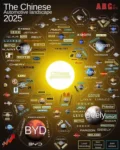
BYD, Changan, Chery, and Geely dominate the market, commanding over half of all sales. Meanwhile, startups like Nio, Xpeng, and Xiaomi maintain their independence but face mounting pressure. Many brands will struggle to survive in the next decade.
The Top 10 Best-Selling Car Brands in China for 2024: BYD Leaves Toyota and Tesla in the Dust
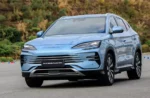
In 2024, BYD witnessed a remarkable feat, selling an impressive 3.5 million cars to Chinese customers. This achievement left its competitors in the top 10 far behind.
Over Half of Cars Sold in China are Electric Vehicles
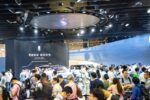
The electric vehicle industry in China has witnessed a remarkable milestone. In the first two weeks of April, sales of new energy vehicles (NEVs) accounted for over 50% of the total vehicles sold in the market, setting a new record.