




























According to the China Passenger Car Association (CPCA), China exported 8.32 million vehicles in 2025, marking a 30% increase compared to 2024. Among these, new energy vehicles (NEVs), including pure electric vehicles (EVs) and plug-in hybrid electric vehicles (PHEVs), accounted for 3.43 million units, surging by 70%. This growth rate significantly outpaced the 16% increase recorded in 2024. CPCA data also reveals that Mexico, Russia, and the United Arab Emirates (UAE) were the top three importers of Chinese vehicles in 2025.
| No. | Market | Chinese Vehicle Imports |
| 1 | Mexico | 625,187 |
| 2 | Russia | 582,738 |
| 3 | UAE | 571,937 |
| 4 | UK | 335,551 |
| 5 | Brazil | 322,076 |
| 6 | Saudi Arabia | 302,189 |
| 7 | Belgium | 300,103 |
| 8 | Australia | 297,382 |
| 9 | Philippines | 256,681 |
| 10 | Kazakhstan | 211,545 |
Top 10 Importers of Chinese Vehicles in 2025
During 2023-2024, China’s primary vehicle export markets included Russia, Mexico, Belgium, Australia, Saudi Arabia, and the UK. Recently, Australia, the UAE, and the UK have shown notable improvements in import figures.
In 2025, market dynamics shifted as Mexico took the lead, and vehicle exports to the UAE surged. Notably, in December 2025, the UAE rejoined the top-performing markets. Meanwhile, exports to the UK remained strong, Australia maintained stability, and Brazil saw a decline compared to 2024.
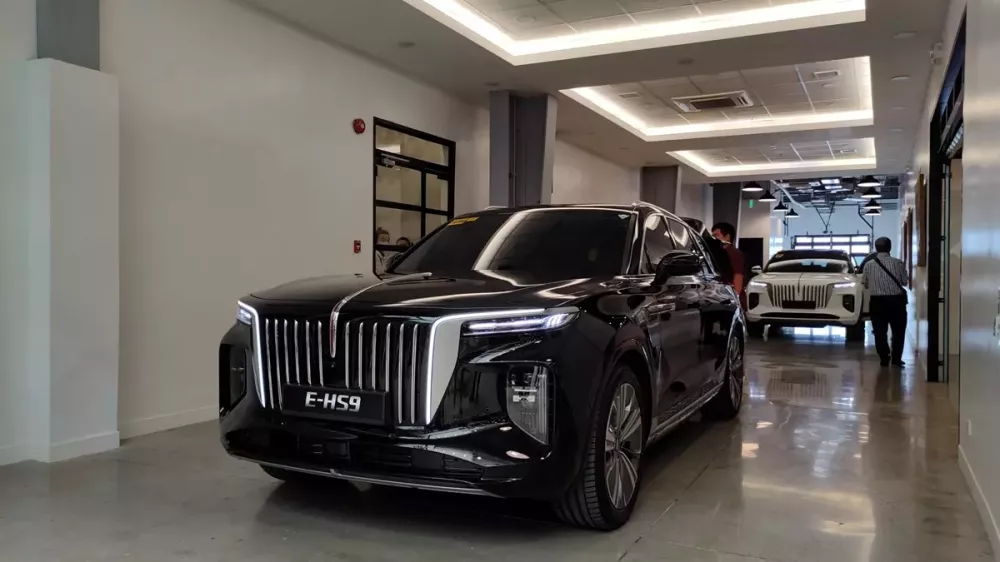
The Philippines ranked among the top 10 importers of Chinese vehicles in 2025.
In the NEV segment, pure electric vehicles (EVs) constituted 28% of total Chinese vehicle exports, a 2% increase year-over-year. Plug-in hybrids (PHEVs) accounted for 13% (up 8%), and hybrids for 6% (up 2%). Traditional gasoline-powered vehicles made up 43%, down 11% from the previous year.
Belgium led NEV imports from China, followed by the UK and Mexico. Thailand, Indonesia, and India also featured in the top 10 NEV importers, though they did not rank among the top 10 overall vehicle importers.
| No. | Market | Chinese NEV Imports |
| 1 | Belgium | 284,921 |
| 2 | UK | 231,181 |
| 3 | Mexico | 221,027 |
| 4 | Brazil | 200,825 |
| 5 | Philippines | 200,544 |
| 6 | UAE | 191,946 |
| 7 | Thailand | 151,633 |
| 8 | Australia | 145,781 |
| 9 | Indonesia | 126,536 |
| 10 | India | 102,691 |
Top 10 Importers of Chinese NEVs in 2025
Vietnam’s customs data reveals that 47,895 Chinese vehicles were imported in 2025, a 54% increase from 2024. China ranked third in vehicle exports to Vietnam, following Indonesia (78,156) and Thailand (66,109). These three countries collectively accounted for over 93% of Vietnam’s total vehicle imports in 2025.
In Vietnam, 13 Chinese automobile brands operate, excluding commercial vehicle manufacturers. The top-selling brands were MG (9,601 units), BYD (3,718 units), Omoda (1,389 units), Geely (1,216 units), and Wuling (1,093 units).
In recent years, Chinese vehicle exports have shown seasonal trends, peaking during summer, contrasting with domestic consumption patterns. In January 2025, export growth was robust, but it slowed from February to April due to U.S. tariff measures. Exports rebounded from May to November, with a surge in used vehicle exports in December 2025.
The average export price of Chinese vehicles continued to decline, partly due to Tesla’s reduced export share.
| Year | Average Export Price (USD) |
| 2022 | 17,000 |
| 2023 | 19,000 |
| 2024 | 18,000 |
| 2025 | 16,000 |
Average Export Price of Chinese Vehicles Over the Years
Chinese Auto Industry: Trillion-Dollar Revenue Meets Rock-Bottom Profits

According to newly released data from the China Passenger Car Association (CPCA), the profit margin of China’s automotive industry from January to November 2025 stood at a mere 4.4%.
The Alluring Automotive Appeal: Vietnam’s $9.6 Million Daily Import Affair

The Indonesian and Thai automotive industries continue to dominate the market. There has been a significant increase in the number of vehicles imported from China compared to last year.