















The new regulation mandating child car seats in vehicles has sparked intense discussions in recent days.
While child safety seats have long been common in many countries and even available in Vietnam for years, it’s only with the introduction of penalties that market interest has surged dramatically. This has raised numerous questions about quality, origin, and the proliferation of affordable child seats flooding e-commerce platforms.
This situation echoes the 2007 mandate requiring motorcycle helmets. Back then, the market was instantly flooded with “helmets” priced between a few thousand to tens of thousands of dong, widely sold at street stalls and cafes. These items helped people evade fines but largely failed to meet technical standards, offering no real protection.
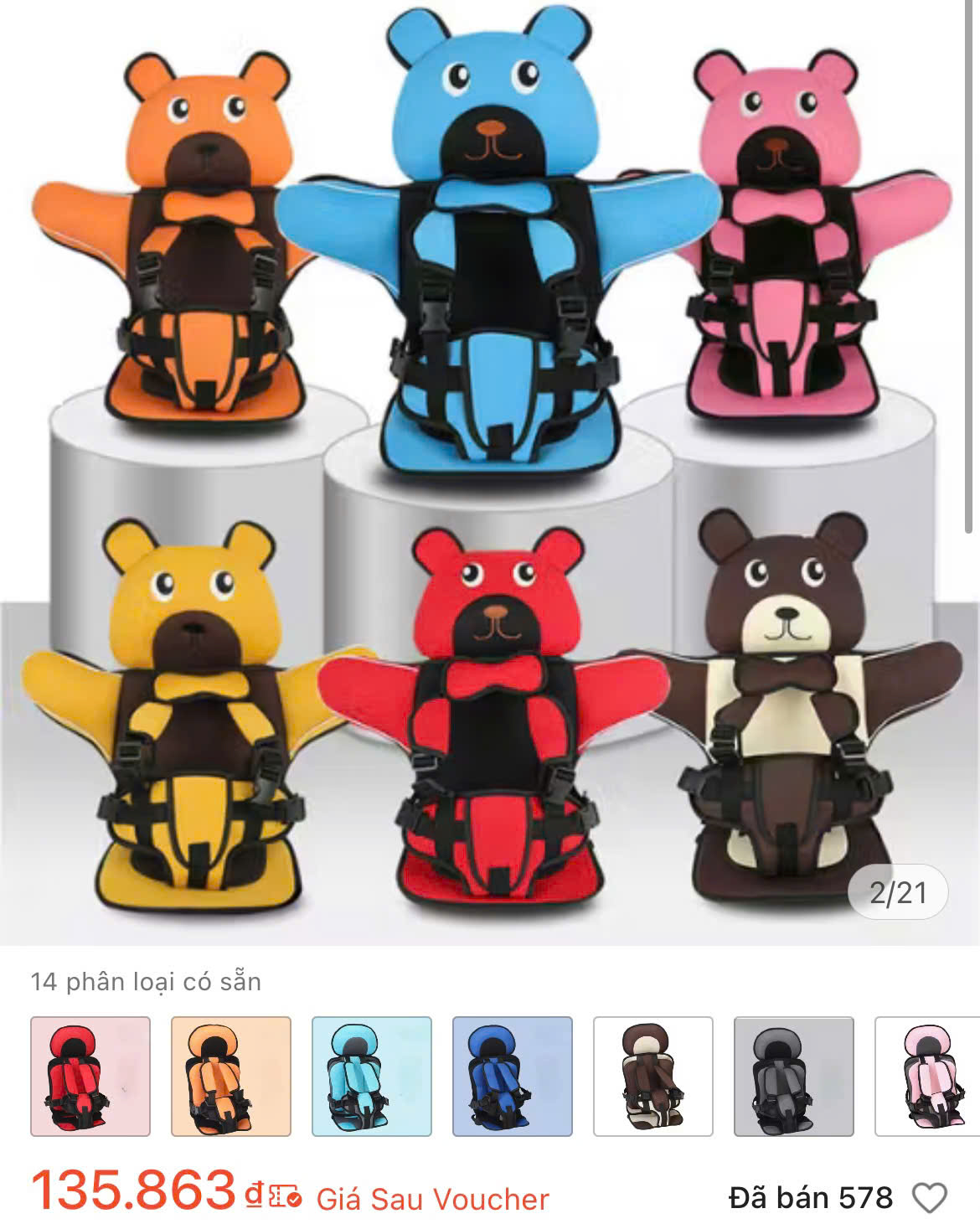
A similar pattern seems to be emerging with child seats. A quick search on e-commerce platforms reveals numerous options priced between 90,000 and 150,000 dong. These are significantly cheaper than safety-certified seats, which typically range from one to several million dong. With their low cost, simple design, and enticing advertisements, these products easily attract parents, especially as demand spikes to avoid fines of up to one million dong.
However, the unusually low prices raise concerns about quality and their ability to protect children in collisions. Safety-certified child seats undergo rigorous testing, including frontal and side-impact tests, strap durability assessments, and shock absorption evaluations. These requirements drive up production costs, making it nearly impossible to produce compliant seats for under 100,000 dong.
Many traffic safety experts warn that using low-cost seats with unclear standards may create a false sense of security, potentially making them more dangerous than using no seat at all. Children could slip out of the harness, be ejected from the seat, or the seat itself could break apart during a collision.
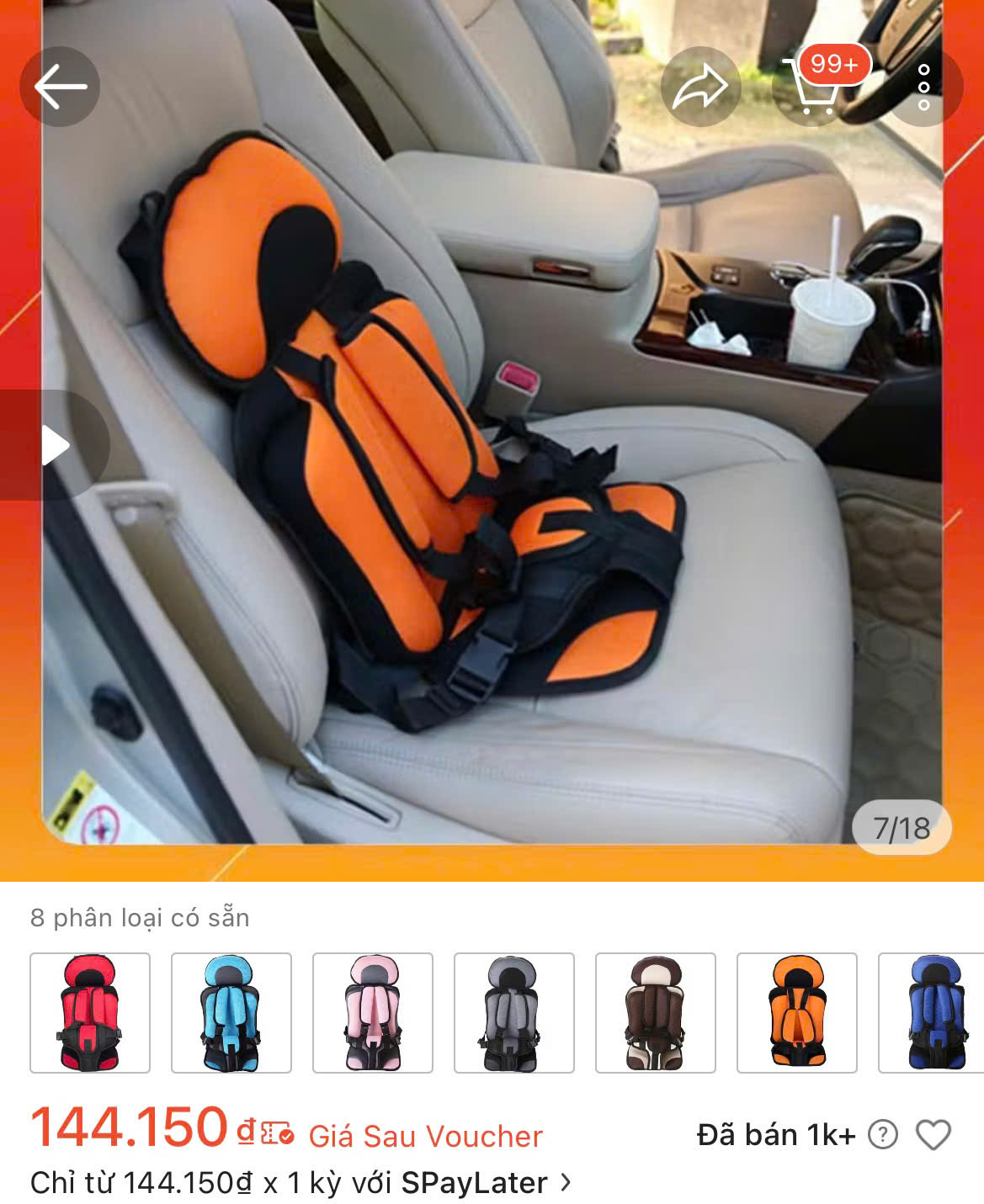
From a regulatory perspective, penalties are just the beginning. More critically, a clear standard system must be established to monitor product quality in the market, alongside measures to address counterfeit and substandard goods. Without this, the market risks becoming a confusing maze, leaving parents struggling to distinguish between compliant products and those merely designed to evade penalties.
For consumers, investing in a child seat should be about safeguarding their child—the most vulnerable group in traffic accidents—rather than just avoiding fines. International studies show that certified child seats reduce child fatality risk by 70% and severe injury risk by 50% in car crashes. These statistics cannot be replaced by a 99,000-dong seat that only meets superficial requirements.
The mindset of “doing the bare minimum” has long existed, but when it comes to child safety, choices must be far more cautious. Parents should thoroughly research and prioritize products with international safety certifications like ECE R44/04, ECE R129 (i-Size), or equivalent standards. Retailers and authorized dealers must also provide transparent information to help consumers make informed decisions.
As the new regulation takes effect, the child seat market will undoubtedly experience significant fluctuations. To avoid repeating the “2007 fake helmet scenario,” stricter regulation and heightened consumer awareness are crucial. Parents must not compromise their child’s safety with low-cost, unverified products, even if they temporarily avoid a one-million-dong fine.
TH (Tuoitrethudo)
Illustrative image
New Child Safety Regulations for Car Travel Effective 2026

As of January 1, 2026, new regulations on child safety in vehicles will come into effect, marking a significant shift in the Road Traffic Order and Safety Law of 2024.
Honda Vietnam Launches Nationwide Helmet Donation Program for First-Grade Students

Honda Vietnam (HVN), in collaboration with the National Traffic Safety Committee (NTSC) and the Ministry of Education and Training (MOET), proudly launches the nationwide Helmet Donation Program for First Graders in the 2025-2026 academic year.
The Slow Lane: When Driving Too Slow Becomes a Highway Hazard
Recently, several truck drivers traveling below the minimum speed limit on the Van Phong-Nha Trang highway were issued tickets and fined.
Confused Candidates Stumped by “Ôtô Xi-téc” in Practice Driving Test Question.

When studying for their driving theory test, many learners come across the term “ô tô xi-téc” and are often left scratching their heads.
The Prime Minister Calls for AI Integration in Traffic Violation Detection

Prime Minister [Name] has instructed the police and relevant authorities to step up patrols and enforce strict legal action against those who violate traffic rules and cause serious accidents. This directive emphasizes the government’s commitment to road safety and sends a strong message to deter reckless driving and ensure the well-being of all citizens.