




























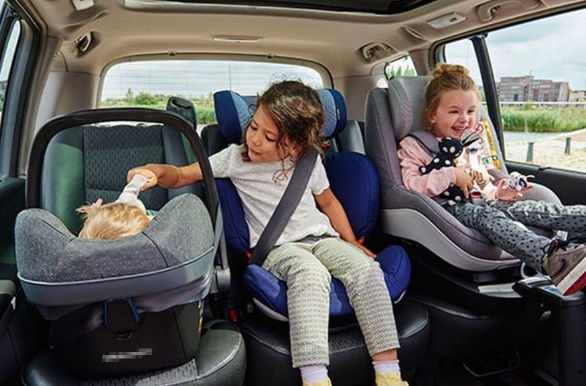
The Ministry of Justice has recently announced the results of a review of the draft law amending several provisions of 10 laws related to security and order. This draft law is currently under consideration by the National Assembly through an expedited process during its 10th session.
Among the amended laws is the Road Traffic Order and Safety Law, which explicitly outlines the responsibilities of drivers when transporting children in vehicles.
According to the approved regulations, starting from January 1, 2026, when transporting children under 10 years old and shorter than 1.35 meters, drivers must not allow children to sit in the same row as the driver, except in vehicles with only one row of seats. Additionally, drivers are required to use or instruct the use of appropriate safety devices, such as child safety seats.
During National Assembly discussions, many delegates argued that this regulation is suitable for family cars or long-distance vehicles but poses challenges for taxis and urban transport services.
The main issue is that taxis often serve multiple groups of passengers daily, making it difficult to prepare child seats in advance. In some cases, there may be 2-3 children traveling together, but taxis cannot accommodate multiple seats simultaneously. Moreover, child seats occupy space, incur costs, and are rarely used. Constantly installing and removing them is inconvenient and impacts business operations.
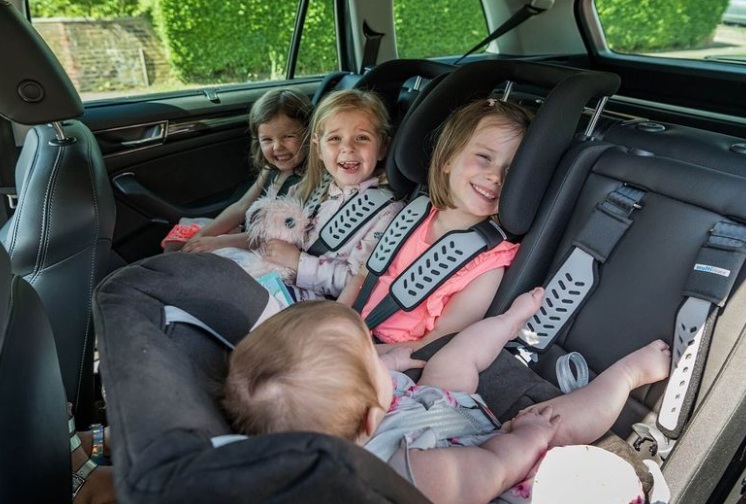
Therefore, many suggestions propose exempting passenger transport vehicles, including fixed-route vehicles, buses, taxis, contract cars, and other passenger transport services, from this requirement.
In response to this feedback, the draft law has been revised to: Continue mandating the use of child safety devices, but exempt passenger transport vehicles from this rule.
Specifically, the proposed content is as follows: “When transporting children under 10 years old and shorter than 1.35 meters, drivers must not allow children to sit in the same row as the driver; they must use or instruct the use of appropriate safety devices, except in passenger transport vehicles.”
This proposal alleviates pressure on taxis and passenger transport services, avoiding additional costs and awkward situations related to installing multiple child seats. However, the regulation maintains safety requirements for family vehicles and other suitable vehicles.
Currently, the draft is under further review by the National Assembly and will be decided upon during this session.
Prediction: Child Seats and Cushions to Become the New Automotive ‘Gift’ by 2026

Effective January 1, 2026, the Road Traffic Order and Safety Law 2024 mandates that children under 10 years old and shorter than 1.35 meters must sit in the rear seats and use appropriate safety devices. Violators face fines ranging from 800,000 to 1,000,000 VND.
Essential Tips for Choosing and Using Child Safety Seats

As of January 1, 2026, the use of child safety seats in vehicles will become mandatory under the 2024 Road Traffic Order and Safety Law.
Parents Anxious as Mandatory Child Safety Device Deadline Approaches

As of January 1, 2026, new regulations under the 2024 Road Traffic Order and Safety Law, aimed at ensuring the safety of children traveling in automobiles, will officially come into effect.
Essential Safety Gear for Kids in Cars: What Every Parent Should Know

As of January 1, 2026, new regulations on child safety in vehicles will come into effect, marking a significant shift in the Road Traffic Order and Safety Law of 2024.
The Great License Plate Shuffle: New Number Plates for Merged Provinces and Cities from July 1st, 2025.

The vibrant city of Hanoi will boast a total of six distinct license plate prefixes, while the bustling metropolis of Ho Chi Minh City will feature an impressive thirteen.