
























Volkswagen is facing a significant recall in the U.S. market due to a potential issue with the occupant detection system (PODS) wiring in certain 2025 Tiguan models. According to the Wolfsburg-based automaker, this flaw could disable the front passenger airbag, posing a safety risk.
The affected crossover vehicles, produced for the 2025 model year, were manufactured between March 24, 2025, and May 12, 2025. The redesigned Tiguan, tailored for the North American market, is assembled at Volkswagen’s Puebla plant in Mexico, which also produces compact models like the Jetta and Taos. In the first half of 2025, the Mexican facility manufactured nearly 160,000 crossovers and sedans.
Volkswagen Recalls Select 2025 Tiguan Models Over PODS Concerns
Volkswagen attributes the issue to a missing crimp in the PODS wiring, which could deactivate the front passenger airbag. The responsibility for this recall falls on Volkswagen de Mexico, the supplier. After receiving numerous field complaints, the German automaker initiated a thorough investigation in July 2025.
The defect, characterized by insufficient crimping in the wiring harness, was identified across multiple vehicles in Volkswagen’s lineup. Following a root cause analysis by the supplier, Volkswagen confirmed the findings and decided to recall all potentially affected units. To date, 58 complaints related to this issue have been reported in the U.S.


In April 2025, the supplier implemented an improved wire crimping process. Volkswagen dealerships have been instructed to repair or replace the front passenger seat wiring harness at no cost to affected customers.
The 2025 Volkswagen Tiguan is available in four trim levels, with only the SEL R-Line Turbo featuring the cast-iron EA888 engine delivering 268 horsepower. Lower trims offer 201 horsepower and 221 pound-feet (300 Nm) of torque, paired with standard front-wheel drive instead of the 4MOTION all-wheel-drive system.

In this context, 4MOTION refers to the electro-hydraulic Haldex coupling system, which can redirect up to 50% of torque to the rear wheels within 100 milliseconds. As a Haldex system, it primarily operates in front-wheel drive mode to maximize fuel efficiency.
Models equipped with 4MOTION achieve a combined fuel economy of 25 miles per gallon (9.4 L/100 km). Switching to pure front-wheel drive improves efficiency to 28 or 29 miles per gallon (8.4 or 8.1 L/100 km) in EPA testing.
Honda CR-V e:FCEV Faces Potential Fuel Cell Coolant Leak Risk
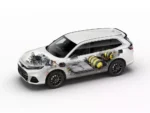
This has prompted Honda to initiate a recall of the CR-V e:FCEV to address a coolant leak within the fuel cell stack.
Skoda Selects Vietnam as New Electric Vehicle Production Hub

The Czech automotive brand is strategically positioning Vietnam as its new regional manufacturing hub, with a particular focus on electric vehicles—a sector poised for explosive growth in the coming decade.
Volkswagen Eyes Southeast Asian Market with China-Made Vehicles
This information was confirmed by Thomas Ulbrich, Chief Technology Officer of Volkswagen Group China, in an interview with the Financial Times.
Volkswagen Unveils Khanh Hoi Urban Store: A Global Standard Dealership in Ho Chi Minh City

Volkswagen Vietnam has officially launched its new dealership, Volkswagen Khanh Hoi, located at 384 Hoang Dieu Street, Khanh Hoi Ward, Ho Chi Minh City.
Skoda: A Century-Long Journey from Bohemian Bicycle Workshop to Global Automotive Icon

Born from a humble bicycle workshop in Bohemia, Skoda has evolved over 130 years into one of Europe’s fastest-growing automotive brands.