





















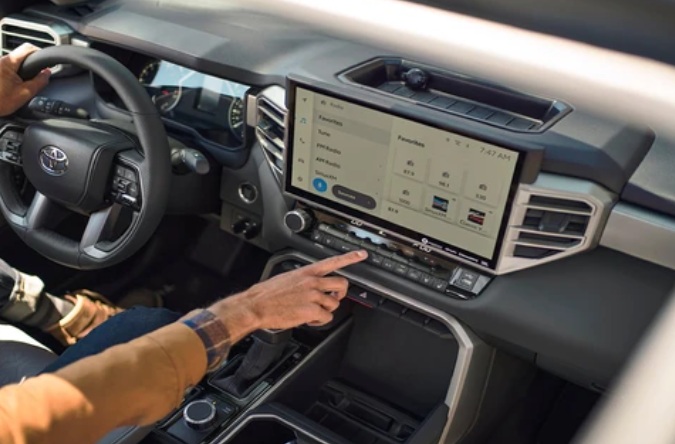
Adjusting the music or air conditioning while stuck in traffic has long been a common habit for many drivers.
However, a recent study reveals that these seemingly harmless actions on touchscreens significantly increase driver distraction and safety risks.
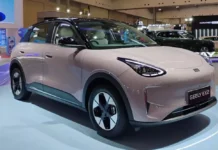
Over the past two decades, the digitization of car interiors has replaced mechanical buttons and knobs with large touchscreens. In many modern vehicles, especially electric cars, most controls are integrated into one or a few central screens, marketed as symbols of technology and modernity. Yet, this design convenience raises significant operational safety concerns.
A study by the University of Washington and Toyota Research Institute provides concrete scientific evidence for these concerns. Titled “Touchscreens on the Move: Measuring Driver Distraction Impact,” it was presented at the 38th ACM Conference on Human Factors in Computing Systems.
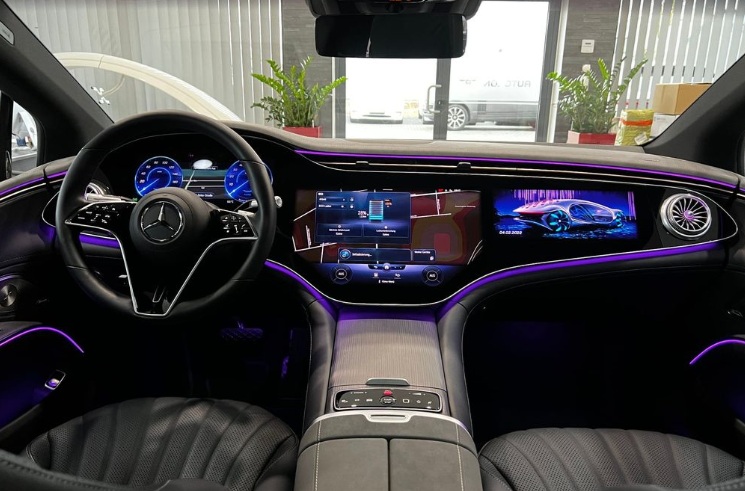
In the experiment, 16 participants were placed in a highly realistic urban driving simulator. Researchers tracked eye movements, hand gestures, pupil dilation, electrodermal responses, and steering control to assess cognitive abilities and stress levels while driving and interacting with the touchscreen.
Results showed that performing familiar tasks like adjusting audio, navigating entertainment, or handling messages significantly impaired driving performance. Accuracy and speed of touchscreen interactions also declined sharply, with more complex tasks causing greater impairment.
Notably, the study focused not on obvious dangers like texting or browsing social media, but on everyday tasks automakers consider “normal” in infotainment systems. Functions once handled by a single button or knob now require simultaneous use of eyes, hands, and cognitive processing, while still needing to monitor traffic.
Simulated data showed a 58% decrease in touchscreen accuracy and speed compared to non-driving conditions. Lane deviation increased by over 40% as soon as drivers began interacting with the screen. Essentially, multitasking degraded both driving and control abilities.
Some suggest reverting to physical buttons as the simplest solution. However, this is unlikely to happen widely. Touchscreens remain appealing to manufacturers due to low costs, ease of implementation, and strong marketing appeal.
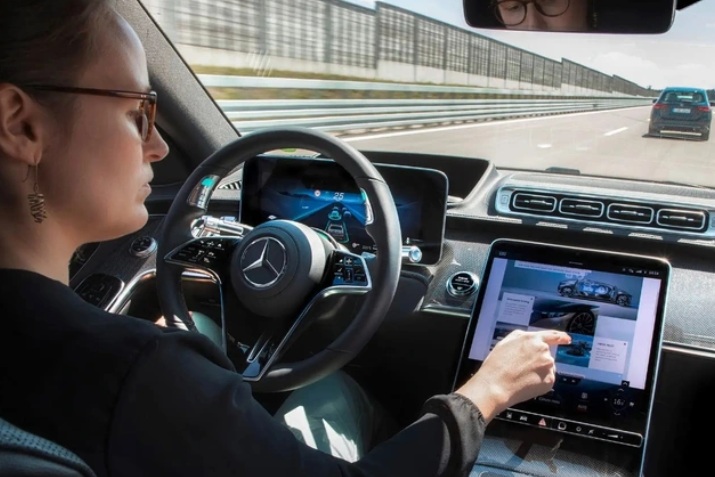
Instead of eliminating screens, researchers propose redesigning interfaces based on real human behavior. Frequently used functions should have fewer menu layers and be easily accessible. Virtual buttons should be larger, more prominent, and predictive of user needs.
Another solution is developing systems that “read” the driver’s mental state. By analyzing stress levels and cognitive load, the system could issue alerts to refocus the driver on vehicle control.
Overall, the risk doesn’t stem from touchscreens themselves but from interface design philosophy. When cabins exceed human attention capacity, conveniences meant to enhance the experience can become distractions, compromising road safety.
TH (Tuoitrethudo)