





























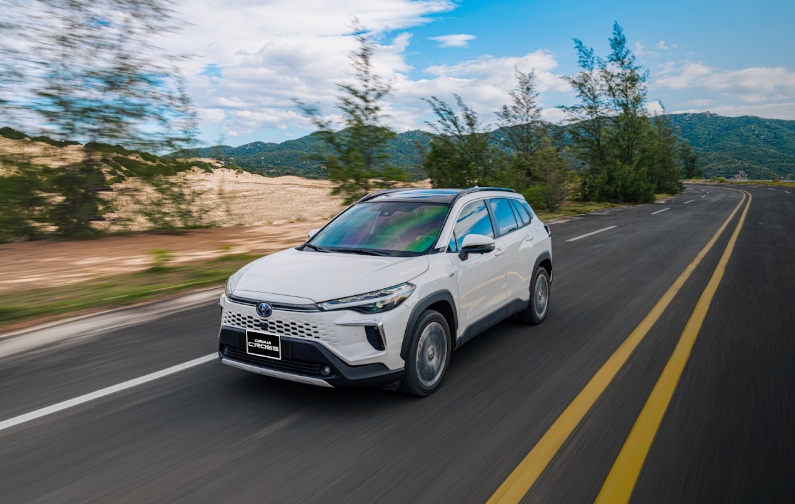
Vietnam’s automotive market is on the cusp of a historic shift towards green vehicles.
Starting January 1, 2026, hybrid vehicles will enter a “golden era” thanks to groundbreaking tax incentives. This move is expected to significantly boost the hybrid segment, which has been growing but not yet booming in recent years.
According to the amended Special Consumption Tax Law passed by the National Assembly on June 14, 2025, all hybrid vehicles, including self-charging hybrids (HEV) and plug-in hybrids (PHEV), will be subject to a special consumption tax rate of 70% compared to their gasoline counterparts. The new regulation takes effect in 2026, replacing the previous approach that only favored PHEVs, while HEVs were taxed similarly to traditional internal combustion engine vehicles.
To qualify for the tax benefits, hybrid vehicles must consume at least 30% less fuel than their gasoline counterparts in the same segment. Grouping HEVs and PHEVs under the same incentive scheme not only simplifies the policy but also reflects the trend of promoting emission reduction solutions during the transition phase, as pure electric vehicles still face infrastructure and cost barriers.
The impact of the special consumption tax reduction goes beyond a single figure, creating a “ripple effect” on the overall cost of vehicle ownership. As the special consumption tax decreases, value-added tax (VAT) and registration fees will also decrease proportionally. For an imported vehicle with an original value of approximately 500 million VND (under 2.0L engine capacity), consumers can save directly over 73 million VND when including both special consumption tax and VAT. For high-end vehicles with larger engines and higher prices, the reduction can reach hundreds of millions of VND, helping hybrid vehicles gradually eliminate the price barrier compared to traditional gasoline cars.

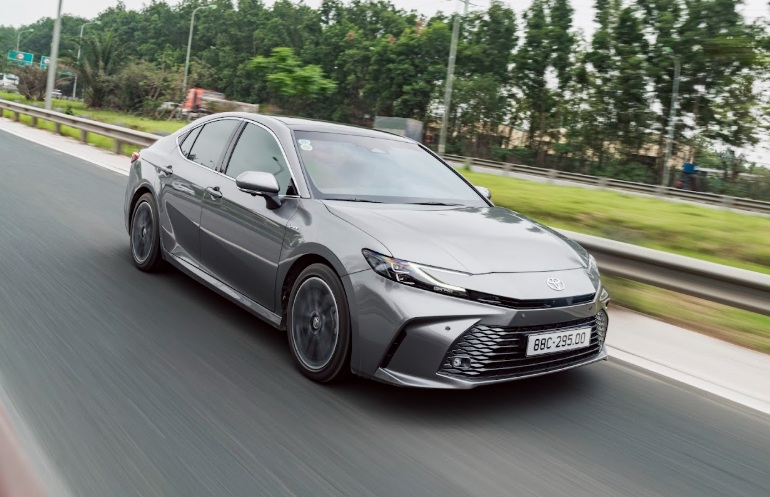
Although the new regulation will take effect in just a few days, the wave of incentives has already spread strongly across dealerships. Major players like Toyota and Honda have taken proactive steps by offering 100% registration fee support or direct discounts of hundreds of millions of VND for strategic models. Notably, the Toyota Camry HEV, priced at around 1.3 billion VND, and the Honda CR-V e:HEV RS, currently receiving support equivalent to 126 million VND, are prime examples. Even newcomers like the BYD Sealion 6 PHEV have joined the race with high-value gift packages and registration fee support.
With the synchronized changes in tax policies and early market stimulation efforts from manufacturers, 2026 is projected to be a breakthrough year for hybrid vehicles in Vietnam. As consumers remain cautious about the costs and infrastructure of pure electric vehicles, hybrids are likely to become a more affordable and suitable choice during the transition phase of the domestic automotive market.
Luxury Imported Cars Expected to Drop in Price as Taxes Decrease from 2026

The Vietnamese automotive market is poised for a significant shift in early 2026, with predictions of substantial price reductions—up to hundreds of millions of dong—on numerous imported luxury car models.
Top 5 Best-Selling Car Brands in Vietnam as of November 2025

The Vietnamese automotive market is concluding the final months of 2025 with a remarkably impressive growth trajectory.
Hybrid Cars to Enjoy Tax Breaks from 2026: Save Up to Hundreds of Millions of Dong on Your Purchase

The Vietnamese automotive market is on the cusp of a historic transformation, paving the way for a greener future with the rise of eco-friendly vehicles.
Top-Selling Car Brands in Vietnam After 11 Months of 2025

As of November 2025, Vietnam’s automotive market has achieved a record-breaking sales milestone, with a staggering 522,644 vehicles sold.
November 2025 Mid-Size Sedan Sales: Toyota Camry Reigns Supreme in Its Segment

As the market surged in November 2025, the mid-size sedan segment experienced a notable upswing in growth.