























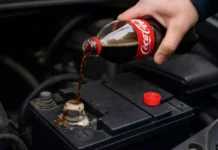




There’s a long-standing misconception that Coca-Cola, other sodas, or any acidic beverages can effectively remove corrosion from car battery terminals. Even Coca-Cola itself once claimed its sugary drink could “help clean rust or corrosion due to its phosphoric acid content—a food-grade acid found in many foods and drinks.” The company further stated that “any acidic beverage like orange juice, lemon juice, or champagne can have a similar effect” in cleaning metal and terminals.
However, the beverage giant concluded that Coca-Cola is best enjoyed as a refreshing drink rather than a household cleaner or car maintenance tool. While grabbing a soda to clean battery terminals might seem convenient, there are several reasons why Coca-Cola and its counterparts should be your last resort.

Why Do Car Battery Terminals Corrode?
First, let’s understand why battery terminals often develop white, blue, or green corrosion. Lead-acid batteries contain a mixture of water and sulfuric acid as their electrolyte. If the battery case cracks, this acidic solution can leak, causing corrosion.

Battery terminals often show white, blue, or green corrosion after prolonged use.
Additionally, a colorless, odorless gas plays a significant role. During charging and discharging, water inside the battery splits into hydrogen and oxygen. While a safety valve releases excess hydrogen to reduce pressure, issues arise when this gas lingers.
Hydrogen can react with lead, steel, and copper components in the engine bay, especially in poorly ventilated areas. Blue or green corrosion typically results from hydrogen reacting with copper in wires or clamps. White corrosion, on the other hand, forms when hydrogen interacts with aluminum, lead, or zinc. Severe corrosion on the negative terminal may indicate starter system issues.
Does Corrosion Mean Your Battery is Failing?
Terminal corrosion doesn’t necessarily mean your battery is dying. It often indicates frequent charging and discharging under high temperatures. Long drives with a weak battery can increase hydrogen gas release, exacerbating corrosion. Adding high-power accessories like LED lights or sound systems can overwork the alternator and charging system.
Hot, humid weather also intensifies corrosion by increasing battery and charging system strain. This is why batteries often fail faster in hot climates and why annual load tests are recommended for batteries over two years old.
Ignoring corrosion can harm an otherwise healthy battery. The seemingly harmless white or green residue can hinder charging and make starting your vehicle more difficult.
Soda Can Worsen the Problem
If you think Coca-Cola can reverse corrosion, think again. Its acidic and sugary composition can expose the battery to more acid, leaving a sticky residue that attracts dirt, dust, and insects, requiring extra cleaning. You also risk soda seeping into cracks and disrupting the battery’s delicate internal chemistry.
The Best Way to Clean Battery Corrosion
The most effective solution for removing battery corrosion is a mixture of water and baking soda. Baking soda instantly neutralizes acid and corrosion without damaging battery components, making cleanup easy.

Use a water and baking soda mixture to remove battery terminal corrosion.
Steps to follow:
- Disconnect the negative terminal first, followed by the positive, to prevent sparks or shorts.
- Mix water and baking soda into a thick paste.
- Wear gloves and safety goggles, then apply the paste to corroded areas.
- Gently scrub with an old toothbrush to remove residue.
- Rinse with distilled water and dry with a clean cloth.
- Reconnect the positive terminal first, then the negative.
- Apply dielectric grease to terminals and connectors to prevent future corrosion.
Lemon Juice or Vinegar Works Too
Lemon juice or white vinegar can also clean corrosion. Avoid pouring them directly onto terminals; instead, dip a cloth in the liquid and wipe affected areas. Rinse thoroughly with distilled water and dry.

Lemon juice or vinegar can effectively remove corrosion.
Specialized battery cleaning products are another option. While pricier than DIY solutions, their spray-on formulas remove corrosion and protect against future buildup.
Final Thoughts
Make it a habit to inspect your battery and terminals at least twice a year to catch corrosion early. Older batteries are more prone to this issue. Load testing is the only way to determine if your battery is still reliable, so consult a professional mechanic if in doubt.