




























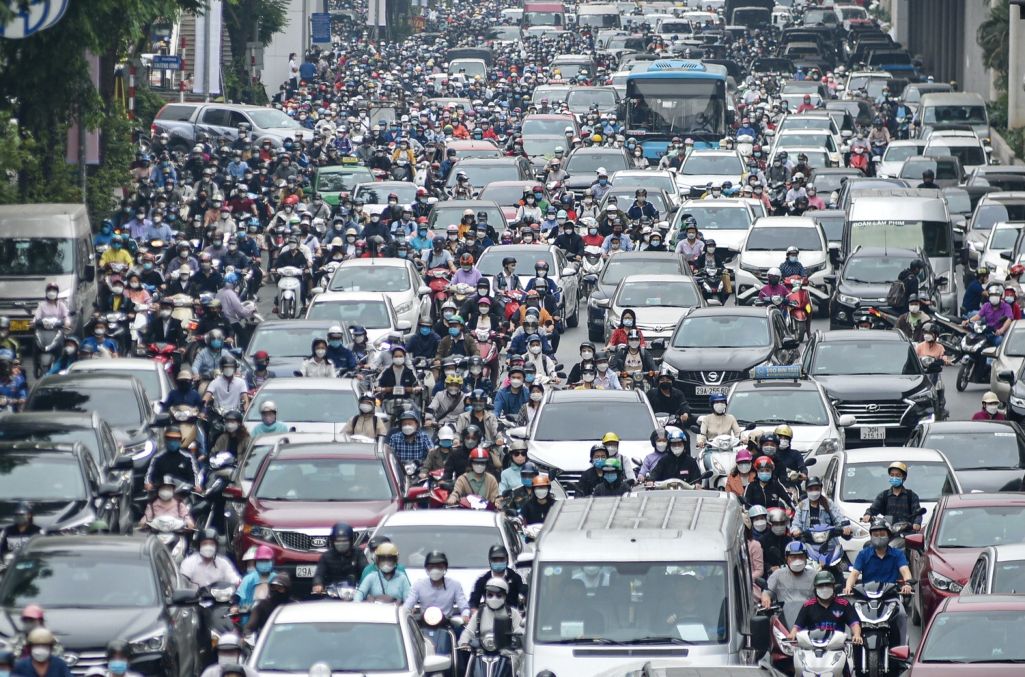
Starting in 2026, Vietnamese car owners will directly experience significant changes in vehicle management policies, impacting usage costs, traffic conditions, and legal obligations.
This marks a period of stringent adjustments by regulatory authorities to standardize the market, enhance transparency, and promote sustainable vehicle consumption.
Elimination of Road Maintenance Fee Stickers on Windshields
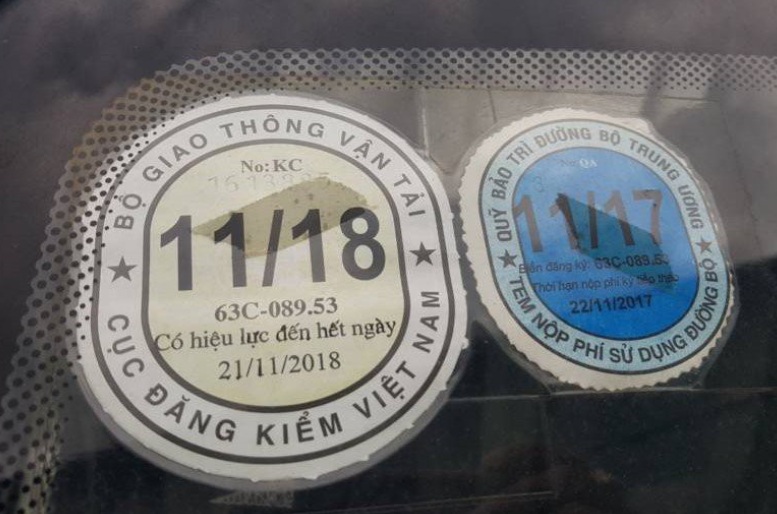
One of the most notable changes is the official elimination of road maintenance fee stickers on car windshields. According to Decree No. 364/2025/NĐ-CP, effective from January 1, 2026, road maintenance fee management will transition entirely to an electronic system, replacing the long-standing paper sticker method. This new regulation supersedes Decree 90/2023, aligning with the government’s push to reduce administrative procedures and digitize vehicle management.
The Vietnam Register confirms that maintaining fee stickers on windshields is no longer necessary, as all payment data is now integrated into an electronic system accessible online. Currently, there are no specific regulations regarding inspections or penalties for failing to display stickers or unpaid fees. Most vehicle owners still pay road maintenance fees during their periodic inspections, even if overdue. From 2026, registration centers will directly verify financial obligations using the fee management system.
Additionally, Decree 364 revises vehicle classification for fee calculation. Instead of differentiating between personal and organizational vehicles, the new rule categorizes them based on usage: non-commercial and commercial transport. For non-commercial passenger vehicles with up to 8 seats (excluding the driver’s seat), the fee is 130,000 VND per month, while commercial vehicles are charged 180,000 VND monthly. Other vehicle categories retain their previous rates but are updated to align with the 2024 Road Traffic Order and Safety Law. With the elimination of the 18-month inspection cycle, the corresponding fee collection method is also discontinued.
Mandatory Safety Devices for Children in Cars from July 1, 2026

Beyond fee changes, stricter child safety regulations in cars will take effect from July 1, 2026. Under the 2024 Road Traffic Order and Safety Law and related amendments, children under 10 years old or shorter than 1.35 meters must sit in the back seat with appropriate safety devices, unless the vehicle has only one row of seats. This rule does not apply to commercial passenger vehicles.
Violators face fines ranging from 800,000 to 1,000,000 VND. Although the penalty is modest, the regulation is expected to significantly impact family habits, particularly among parents who often place children in the front seat for short trips.
Stricter Emission Standards for Cars from March 1, 2026
In parallel, vehicle emission standards will be tightened starting March 1, 2026, as outlined in a decision signed by Deputy Prime Minister Tran Hong Ha in late November 2025. Vehicles must meet emission levels corresponding to their manufacturing year.
Specifically, cars produced before 1999 must meet Level 1 (equivalent to Euro 1); those from 1999 to 2016 must meet Level 2; and vehicles from 2017 to 2021 must meet Level 3. This regulation replaces Decision 16/2019/QĐ-TTg, imposing stricter requirements that encourage maintenance, upgrades, or gradual retirement of older vehicles.
In Hanoi and Ho Chi Minh City, the implementation timeline is more rigorous. From January 1, 2029, vehicles in these cities must meet at least Level 2. Cars manufactured from 2022 must comply with Euro 4 standards by March 1, 2026, and Euro 5 by January 1, 2028, to enter urban areas. Vehicles produced between 2017 and 2021 have an extended timeline but must meet Euro 5 standards by 2032.
New Special Consumption Tax for Pickup Trucks from January 1, 2026
.jpg)
From January 1, 2026, passenger pickup trucks will be subject to a new special consumption tax, ranging from 35% to 150% based on engine cylinder capacity. Dual-cabin cargo pickup trucks face a lower tax rate, from 15% to 25%, also determined by cylinder capacity. However, the tax rate for dual-cabin cargo pickups will increase to 24% to 34% from 2029.
For electric pickup trucks, the tax policy varies significantly. Passenger electric pickups will be taxed at 3% from January 1, 2026, rising to 11% from March 1, 2027. Dual-cabin cargo electric pickups will be taxed at 2% and 7% during the same periods, respectively.
Passenger pickup trucks with non-battery electric powertrains face a 15% tax rate, while dual-cabin cargo pickups in this category are taxed at 10%.
TH (Tuoitrethudo)
Which Cars in Vietnam Come Pre-Installed with Child Safety Seats?

The demand for child safety devices in vehicles has surged in recent years, as more families prioritize protecting their children during travel.
Hanoi Proposes Time-Based Ban on Gasoline Motorcycles to Establish Low-Emission Zone

At the 28th session held from November 26 to 28, the Hanoi People’s Council is expected to consider issuing a new resolution to replace Resolution 47/2024/NQ-HĐND, thereby adjusting regulations on the organization of low-emission zones within the city.
The Ultimate Guide to Mastering On-Page SEO: Optimize Your Website Like a Pro

The Ministry of Agriculture and Environment has confirmed that vehicles manufactured before 2017 will still be allowed to circulate in major cities.
The Lada Car’s Imminent Launch in Vietnam: Affordable Purchase, But Costly Maintenance.

In the context of fluctuating fuel prices and the emerging trend of stricter emission standards in Vietnam, fuel efficiency has become a pivotal factor in consumers’ car-purchasing decisions, especially in the mass-market segment.
The Lada Car’s Imminent Launch in Vietnam: Affordable Purchase, But Costly Maintenance.

In the context of fluctuating fuel prices and the emerging trend of stricter emission standards in Vietnam, fuel efficiency has become a pivotal factor in consumers’ car-purchasing decisions, especially in the mass-market segment.